

TL;DR:
- Food sensitivities involve immune reactions to foods that cause delayed symptoms and affect many body systems.
- Identifying sensitivities requires supervised elimination diets, not commercial IgG tests, to ensure safety and accuracy.
Food sensitivities are defined as adverse immune and digestive responses to specific foods that trigger a broad range of symptoms, from bloating and fatigue to skin problems and brain fog. Unlike food allergies, which cause rapid and potentially life-threatening reactions, sensitivities tend to develop slowly and are far harder to pin down. That delayed onset is exactly why food sensitivities matter so much. Left unidentified, they quietly erode your quality of life, sometimes for years. Understanding food intolerance and sensitivity is the first step toward feeling genuinely better.
Why food sensitivities matter: the core distinction
Food sensitivities, food intolerances, and food allergies are three separate conditions. Treating them as interchangeable leads to mismanagement and, often, unnecessary suffering.
A food allergy is an IgE-mediated immune reaction. The immune system identifies a food protein as a threat and mounts an immediate, sometimes severe response. Rapid systemic reactions including skin swelling and breathing difficulties signal an allergy and require emergency medical evaluation, not a home test kit. This is a medical emergency, not a dietary preference.
Food intolerance differs from food allergy and involves digestive issues like enzyme deficiency rather than an immune overreaction. Symptoms such as bloating and nausea typically appear hours after eating. Lactose intolerance is the most widely recognised example: the body lacks sufficient lactase enzyme to break down milk sugar, causing gut discomfort rather than immune alarm.
Food sensitivity sits in a different category again. It reflects a breakdown in immune tolerance, where the immune system begins to overreact to normally harmless food proteins. Gut health imbalance, chronic stress, and poor sleep can all contribute to this shift. The result is a wide, often confusing cluster of symptoms that do not fit neatly into the allergy or intolerance box.
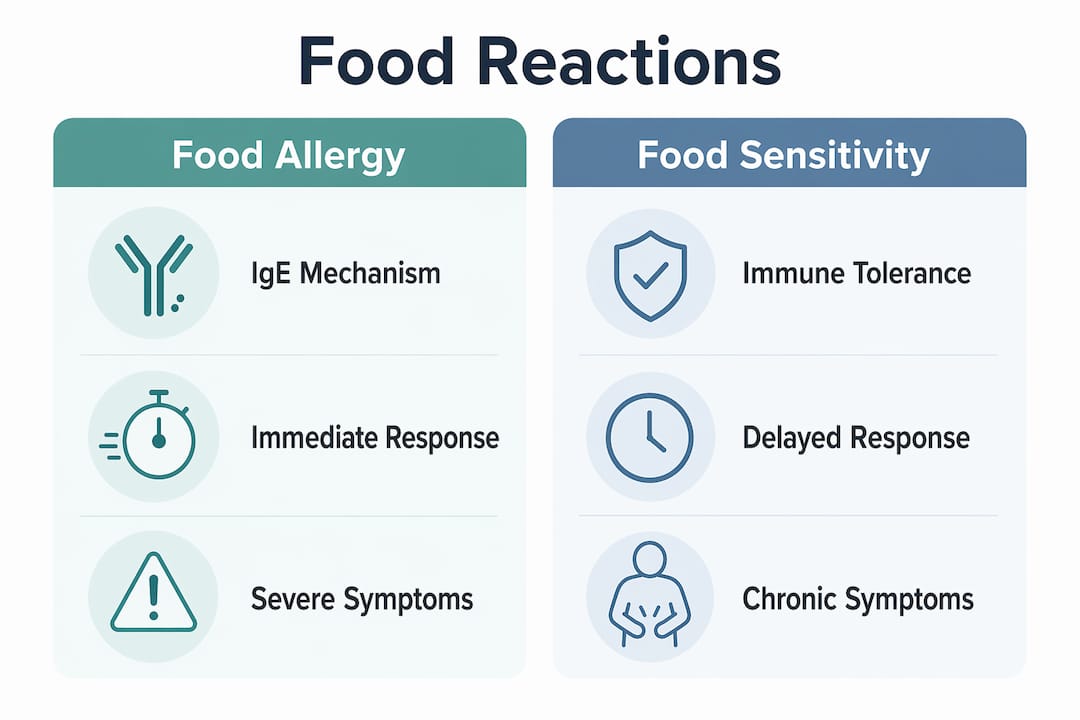
| Feature | Food allergy | Food intolerance | Food sensitivity |
|---|---|---|---|
| Immune mechanism | IgE-mediated | Non-immune (enzyme deficiency) | Immune tolerance breakdown |
| Onset of symptoms | Minutes | Hours | Hours to days |
| Severity | Can be life-threatening | Uncomfortable, not dangerous | Variable, often chronic |
| Common symptoms | Hives, swelling, anaphylaxis | Bloating, nausea, diarrhoea | Fatigue, brain fog, skin issues |
| Diagnosis standard | Allergy testing by clinician | Elimination diet | Elimination and reintroduction |
How do food sensitivities affect your health?
The impact of food sensitivities on daily life is broader than most people expect. Symptoms span multiple body systems, which is why they are so frequently misattributed to stress, poor sleep, or ageing.
Common symptoms include:
- Digestive: bloating, cramping, loose stools, constipation, and nausea
- Neurological: brain fog, difficulty concentrating, and persistent headaches
- Skin: eczema flares, hives, and unexplained rashes
- Systemic: chronic fatigue, joint aches, and low mood
Each of these symptoms, taken alone, points in many directions. Together, they often point to a food trigger that has not yet been identified.
The underlying mechanism matters here. Food sensitivities often reflect reduced immune tolerance, where the immune system overreacts to normally harmless food proteins due to factors like gut health imbalance and stress. This is not simply a digestive problem. It is a sign that the immune system is working harder than it should, and that the gut environment may need support.
“Symptoms attributed to food sensitivities may also stem from conditions like IBS or gut health imbalance. A holistic assessment is essential to identify the true root cause rather than simply removing foods from the diet.”
The importance of food sensitivities becomes clearest when you consider the long-term picture. Chronic, unaddressed sensitivities can contribute to persistent inflammation, reduced nutrient absorption, and a worsening cycle of gut dysfunction. Addressing them early protects both your physical health and your mental wellbeing.
How can you identify and manage food sensitivities effectively?

The most reliable way to identify food sensitivities is through a structured elimination and reintroduction diet. This approach removes suspected trigger foods for a defined period, then reintroduces them one at a time to observe reactions. Elimination diets supervised by healthcare professionals remain the gold standard for diagnosing food intolerances, involving short-term removal and gradual reintroduction of foods to identify triggers safely.
Before starting, understand what commercial IgG tests can and cannot tell you. A positive IgG antibody result generally indicates immune exposure and tolerance to a food rather than intolerance. It is not a validated diagnosis. Leading UK health bodies including the NHS and NICE do not support commercial IgG-based tests for clinical diagnosis due to lack of evidence and risks of unnecessary restrictive diets. Knowing this prevents you from cutting out foods you do not actually need to avoid.
A practical elimination process looks like this:
- Identify suspects. Keep a detailed food and symptom diary for two weeks before starting. Note what you eat, when symptoms appear, and how severe they are.
- Remove trigger foods. Eliminate the most likely culprits (commonly gluten, dairy, eggs, soy, and nuts) for two to four weeks.
- Monitor symptoms. Track changes carefully during the elimination phase. Improvement confirms a likely food link.
- Reintroduce one food at a time. Add each food back over three days, watching for symptom return. Wait at least three days before introducing the next food.
- Seek professional support. Work with a registered dietitian throughout. Clinical guidelines recommend structured elimination diets supervised by registered dietitians to ensure balanced nutrient intake while identifying triggers.
Pro Tip: Never eliminate more than one food group at a time without professional guidance. Overly restrictive diets risk nutrient deficiencies and reduced gut microbiome diversity, potentially worsening food sensitivities long-term.
A sensitivity-friendly diet does not mean a permanently restricted one. The goal is to identify specific triggers, not to shrink your diet indefinitely.
Why restoring gut health and immune tolerance matters long-term
Avoiding trigger foods provides short-term relief. Rebuilding the conditions that caused the sensitivity in the first place provides lasting improvement. This distinction is the most underappreciated aspect of food sensitivity management.
Improving gut microbiome diversity, gut lining integrity, and reducing stress supports restoring immune tolerance and expanding food tolerance over time. The gut microbiome is not a passive bystander. It actively regulates immune responses, and a depleted or imbalanced microbiome makes the immune system more reactive to food proteins.
Lifestyle factors that support immune and digestive balance include:
- Diet variety: eating a wide range of plant foods feeds beneficial gut bacteria and supports microbiome diversity
- Sleep: consistent, quality sleep reduces systemic inflammation and supports immune regulation
- Stress management: chronic stress disrupts gut lining integrity and immune signalling, worsening sensitivity symptoms
- Targeted nutrients: supporting omega-3 intake, vitamin D status, and blood sugar balance aids immune system regulation and reduces food sensitivity symptoms
- Environmental factors: reducing exposure to airborne irritants also supports overall immune load. Research on reducing environmental triggers shows that managing your wider environment complements dietary changes
Shifting from lifelong rigid avoidance to rebuilding immune tolerance improves long-term food tolerance and quality of life. The science is clear: the goal is not a smaller diet. It is a more resilient immune system. For practical steps on adjusting your diet safely, structured guidance makes the process far less daunting.
Key takeaways
Food sensitivities matter because they cause real, wide-ranging symptoms that worsen over time when unaddressed, and because identifying them correctly requires a structured, professionally supported approach rather than commercial testing alone.
| Point | Details |
|---|---|
| Sensitivities differ from allergies | Allergies trigger immediate IgE reactions; sensitivities reflect immune tolerance breakdown with delayed symptoms. |
| Symptoms span multiple systems | Fatigue, brain fog, skin issues, and digestive problems all point to possible food sensitivity triggers. |
| IgG tests are not diagnostic | A positive IgG result shows immune exposure, not intolerance; NHS and NICE do not endorse these tests. |
| Elimination diet is the gold standard | Supervised removal and reintroduction of foods remains the most reliable way to identify triggers safely. |
| Gut health drives long-term recovery | Rebuilding microbiome diversity and immune tolerance reduces sensitivity over time, beyond simple food avoidance. |
Food sensitivities: what the evidence actually tells us
People often come to food sensitivity management after years of unexplained symptoms and frustrating GP appointments. The most common mistake I see is the assumption that cutting out a food is the same as solving the problem. It rarely is.
Removing a trigger food stops the immediate reaction. It does not address why the immune system became reactive to that food in the first place. The gut microbiome, stress load, sleep quality, and nutrient status all feed into immune tolerance. Ignoring those factors means the list of reactive foods tends to grow, not shrink, over time.
The other issue is over-reliance on commercial tests that the NHS and NICE do not endorse. A positive IgG result is frequently misread as proof of intolerance. Clinically, it often means the opposite. Acting on that result without professional guidance can lead to unnecessary restriction and genuine nutritional harm.
My honest view is that food sensitivity management works best when it is patient, structured, and supported. The elimination diet is unglamorous and takes time. But it is the method with the strongest clinical backing, and it gives you real, usable information about your own body. That is worth more than any quick-result test.
— Rob
How Ukfoodintolerance supports your food sensitivity management
If you are experiencing unexplained symptoms and want a clear starting point, Ukfoodintolerance offers non-invasive at-home testing using bio-resonance technology. You collect a small hair sample at home, send it to a UK-based laboratory, and receive a detailed digital report within 48–72 hours.

The reports cover over 1,100 food and environmental items, giving you a broad picture of potential sensitivities to guide your elimination diet. Ukfoodintolerance’s food intolerance tests are designed to support, not replace, professional dietary guidance. They give you a structured starting point so you can work with a dietitian more efficiently, rather than eliminating foods at random. Clear results, fast turnaround, and straightforward reporting make the process accessible for anyone ready to take their health seriously.
FAQ
What is the difference between a food sensitivity and a food allergy?
A food allergy triggers an immediate IgE-mediated immune response that can be life-threatening. A food sensitivity involves a slower immune tolerance breakdown, causing delayed symptoms like fatigue, bloating, and skin issues.
Are IgG food intolerance tests reliable?
The NHS and NICE do not endorse IgG-based food intolerance tests for clinical diagnosis. A positive IgG result typically indicates immune exposure and tolerance to a food, not intolerance.
What is the best way to identify food sensitivities?
The gold standard is a structured elimination and reintroduction diet supervised by a registered dietitian. This method removes suspected trigger foods and reintroduces them one at a time to confirm reactions safely.
Can food sensitivities improve over time?
Yes. Improving gut microbiome diversity, reducing stress, and supporting immune tolerance can expand food tolerance over time. The goal is rebuilding resilience, not permanent avoidance of trigger foods.
What symptoms suggest I might have a food sensitivity?
Common signs include persistent bloating, fatigue, brain fog, skin flares, and joint aches that appear hours after eating. These food intolerance symptoms often overlap with other conditions, so professional assessment is recommended.










Leave a Reply
Want to join the discussion?Feel free to contribute!