

TL;DR:
- Food sensitivity in the UK refers to non-IgE-mediated reactions that cause delayed digestive symptoms and requires cautious, structured testing. Commercial panels like IgG tests are unreliable and often discouraged by experts, emphasizing the importance of symptom diaries and elimination reintroduction methods. A careful, evidence-based approach protects your health, supports accurate diagnosis, and encourages a healthier relationship with food.
Many people in the UK are living with unexplained bloating, fatigue, skin flares, or gut discomfort, and they want answers. It is tempting to reach for a quick online test that promises to reveal your triggers within days. But food sensitivity is often used as a lay term for food intolerance or other non-IgE-mediated, delayed, or digestive reactions, and the landscape of available tests is genuinely confusing. This article cuts through the noise, clarifies what food sensitivity actually means in a UK context, compares testing options honestly, and gives you a clear path forward.
Table of Contents
- What does food sensitivity mean in 2026?
- Testing options: what actually works?
- Why most marketed tests disappoint: evidence and regulation
- Safe next steps for UK residents: getting answers that matter
- A fresh perspective: why a structured approach trumps quick fixes
- Explore your options with UK Food Intolerance
- Frequently asked questions
Key Takeaways
| Point | Details |
|---|---|
| Not all reactions are allergies | Food sensitivity and intolerance are different from allergies, with unique implications for diagnosis and management. |
| Testing has limits | Most commercial tests are not evidence-based, and structured exclusion and reintroduction remain the gold standard. |
| Stepwise approach is safest | Reliable answers begin with self-monitoring, professional support, and only validated medical tests when needed. |
| Evidence guides policy | UK regulators and experts do not support IgG or hair-based tests for diagnosis or treatment of food sensitivity. |
| Stay informed and proactive | Carefully assess your options, avoid unnecessary dietary changes, and seek expert guidance for your wellbeing. |
What does food sensitivity mean in 2026?
The words “food sensitivity,” “food intolerance,” and “food allergy” are used interchangeably in everyday conversation, but they describe very different processes in the body. Getting this right matters, because the wrong label can lead you toward the wrong test, or worse, a missed diagnosis.
In British healthcare, these three terms carry distinct meanings:
- Food allergy involves the immune system producing IgE antibodies. Reactions are typically rapid, sometimes severe, and can be life-threatening. Think peanut anaphylaxis.
- Food intolerance describes a digestive or metabolic difficulty processing a specific food, such as lactose intolerance caused by low lactase enzyme levels. Reactions are uncomfortable but not dangerous.
- Food sensitivity is the broadest and least precise term. It generally refers to non-IgE-mediated reactions where the immune system may play a partial role, or where reactions are delayed and harder to pin down.
| Feature | Food allergy | Food intolerance | Food sensitivity |
|---|---|---|---|
| Immune mechanism | IgE-mediated | Enzyme or metabolic | Non-IgE or unclear |
| Speed of reaction | Minutes | Hours | Hours to days |
| Severity | Can be life-threatening | Uncomfortable | Uncomfortable |
| Diagnosis route | Skin prick/RAST test | Breath test or exclusion | Elimination and reintroduction |
| Treated by | Allergist | Dietitian or GP | Dietitian or self-monitoring |
“Food sensitivity is often interchangeable with intolerance and non-IgE-mediated reactions, but differs from true allergy.” — Guts UK
There is also meaningful overlap with conditions like irritable bowel syndrome (IBS), coeliac disease (an autoimmune response to gluten), and malabsorption disorders. Coeliac disease, for example, is frequently mistaken for wheat sensitivity by people who self-test. Without a formal blood test and biopsy, a coeliac diagnosis is easily missed, and that matters because the management is strict and lifelong.
Understanding these distinctions is not just semantic. It directly shapes which tests are appropriate, which clinician you should see, and how much urgency surrounds your symptoms.
Testing options: what actually works?
After clarifying what food sensitivity means, it is crucial to examine the wide range of testing methods available and which actually deliver reliable results.
The commercial market for food sensitivity testing is enormous. Dozens of companies offer panels claiming to test hundreds of foods at once, from IgG antibody tests to hair analysis kits. But not all methods carry the same weight of evidence. Here is an honest breakdown.
Common non-invasive testing methods
- IgG antibody tests measure levels of immunoglobulin G antibodies to specific foods. These are widely marketed but heavily criticised by UK experts.
- Hair-based tests use bioresonance technology (a method that analyses energy frequencies said to be emitted by a hair sample) to identify potential sensitivities. They are used by companies like UK Food Intolerance as a starting point for exploration.
- Symptom diaries involve recording everything you eat alongside any symptoms, giving you a detailed personal picture over time.
- Structured elimination diets remove suspected trigger foods for a set period, followed by careful reintroduction to confirm reactions.
- Breath tests are clinically validated for specific conditions, such as hydrogen breath testing for lactose or fructose malabsorption.
| Method | Evidence level | Invasive? | Clinician needed? | Best used for |
|---|---|---|---|---|
| IgG antibody test | Low | No | No | Not recommended for diagnosis |
| Hair-based bioresonance | Exploratory | No | No | Starting point for self-monitoring |
| Symptom diary | Moderate to high | No | Optional | Identifying patterns over time |
| Elimination and reintroduction | High (gold standard) | No | Recommended | Confirming specific triggers |
| Breath test (e.g. lactose) | High | No | Yes | Diagnosing specific malabsorption |
The most evidence-based approach to identifying food-related sensitivities is a structured symptom diary combined with supervised elimination and reintroduction. Commercial antibody or hair-based panels alone are not considered diagnostic tools by mainstream UK clinicians.

That said, many people find that a broad screening tool, such as a hair-based sensitivity test, is a useful first step. It can highlight a shortlist of foods worth exploring through a more structured diary and elimination process. The key is understanding what that test does and does not tell you, rather than treating its output as a definitive diagnosis.
Pro Tip: When you receive results from any at-home test, treat them as a starting point, not a verdict. Use them to narrow down which foods to focus on in a structured food diary rather than eliminating everything flagged at once.
If you want a clear, stepwise sensitivity identification process, following an organised sequence is far more likely to give you trustworthy answers than any single panel test on its own.
You can also find practical NHS food intolerance advice through Guts UK, which outlines what evidence actually supports and what does not.
Why most marketed tests disappoint: evidence and regulation
Given the many options, it is essential to know why certain tests are discouraged by experts and regulators.
The most widely sold food sensitivity test in the UK is the IgG antibody test. It works by measuring the level of immunoglobulin G antibodies your blood produces in response to specific foods. Sounds logical, right? The problem is that IgG antibodies reflect exposure to a food, not intolerance. If you eat eggs regularly, you will have IgG antibodies to eggs. That is normal. It does not mean eggs are harming you.
This is why IgG food sensitivity tests are widely criticised by bodies including the Advertising Standards Authority (ASA) and the Committee of Advertising Practice (CAP), which have found no proven diagnostic value for these tests. The Allergy UK charity and Guts UK share this position.
Red flags to watch for in marketed food tests
- Claims that a single test can identify “all your intolerances”
- No requirement to consult a healthcare professional with results
- Long lists of flagged foods with no guidance on how to act safely
- No distinction made between allergy and intolerance in the marketing
- Promises of dramatic symptom resolution without dietary support
“Commercial IgG food sensitivity tests are widely criticised: IgG reflects only exposure to foods, not intolerance.” — ASA/CAP guidance
It is also worth noting that broad panels flagging 50 or 100 foods at once can push people toward unnecessary dietary restriction. Removing a large number of foods simultaneously makes it nearly impossible to identify which one was actually causing symptoms. It can also lead to nutritional deficiencies, particularly in those who eliminate dairy, gluten, and several other food groups at once without dietitian support.
When you are choosing intolerance tests, being honest with yourself about what you want from a test helps enormously. Are you looking for a structured starting point? Or are you expecting a definitive answer? Only the former is realistic at this point in food sensitivity science.
Safe next steps for UK residents: getting answers that matter
With greater clarity around test limitations, what practical steps should you follow for reliable answers?
UK clinicians typically recommend ruling out serious alternative diagnoses before pursuing food sensitivity testing at all. This is not overly cautious advice; it is genuinely protective. Symptoms like unexplained weight loss, blood in stool, or severe abdominal pain need medical investigation, not an elimination diet.
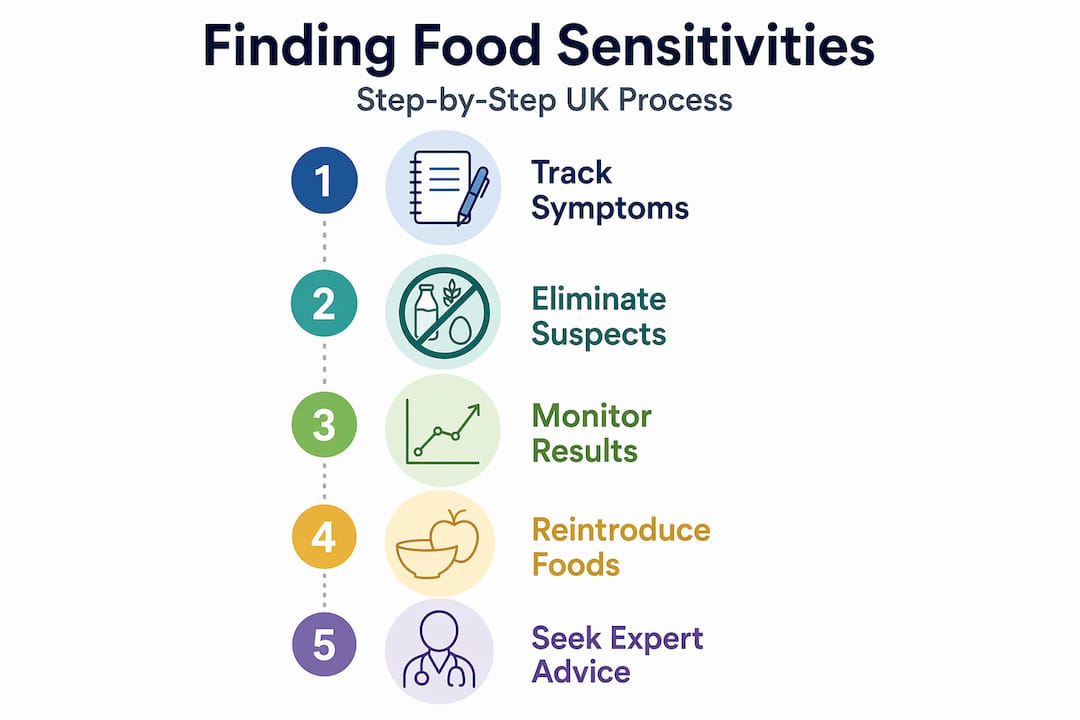
Once serious causes have been ruled out, here is a practical, evidence-informed sequence:
- Visit your GP and describe your symptoms clearly and in detail. Request blood tests to rule out coeliac disease, thyroid disorders, and inflammatory markers.
- Keep a detailed food and symptom diary for at least two to four weeks. Note everything you eat, the time, portion size, and any symptoms that follow.
- Identify potential patterns from your diary. Focus on foods that appear repeatedly before symptoms, rather than guessing based on popular misconceptions.
- Remove one or two suspected foods at a time for three to four weeks. Do not remove many foods simultaneously.
- Reintroduce each food individually after the exclusion period and monitor closely. This “challenge” phase is where real clarity emerges.
- Consult a registered dietitian if you are unsure how to proceed safely, or if your symptoms are significantly affecting your quality of life.
When to seek NHS or GP advice urgently
- Unintentional weight loss alongside digestive symptoms
- Blood in your stool or persistent diarrhoea
- Symptoms that begin after age 50 with no prior history
- Severe reactions that occur rapidly after eating
- A family history of coeliac disease or inflammatory bowel disease (IBD)
UK clinicians typically recommend ruling out serious diagnoses first, then using diet-based challenge or validated tests, rather than broad marketed panels.
Pro Tip: If you are considering an elimination diet, speak to a dietitian before you start. Removing more than one or two foods at once can mask the true trigger and leave you eating a restricted diet unnecessarily.
Validated tests do exist for specific conditions. Hydrogen breath tests can confirm lactose or fructose malabsorption. Blood tests and biopsy can confirm coeliac disease. These are not the same as broad commercial sensitivity panels, and they have a clear clinical purpose.
For a practical overview of adjusting your diet and a structured guide to non-invasive testing, you will find clear and supportive resources that walk you through each stage.
A fresh perspective: why a structured approach trumps quick fixes
Here is an honest view that often gets lost in the noise of food sensitivity marketing: quick results feel reassuring, but they frequently make the journey longer.
When someone receives a long list of flagged foods from a broad commercial panel, the instinct is to eliminate all of them immediately. This feels like taking control. In practice, though, it creates chaos. If you remove fifteen foods at once and feel better, you still do not know which one was the problem. And when you eventually try to reintroduce foods, the process becomes overwhelming, meaning many people stay unnecessarily restricted for months or even years.
There is also the psychological weight of a long flagged list. Seeing 40 or 50 foods marked as potential triggers can create anxiety around eating that is genuinely damaging to wellbeing. Some people become afraid of food itself, which is the opposite of what any health tool should achieve.
The structured approach asks more of you upfront. Keeping a detailed diary takes patience. Waiting three to four weeks on an exclusion before reintroducing feels slow. But what you gain is certainty. When you have followed the process properly, you know, not suspect, which foods affect you. That knowledge stays with you for life and gives you the confidence to eat freely around everything else.
Many UK GPs describe this as the difference between managing anxiety about food and actually managing food reactions. The structured identification steps build self-trust in a way that no single panel result ever can.
Broad panels are not useless. Used thoughtfully as a shortlist of foods worth investigating, they can save time. The mistake is treating them as the final word. They are the beginning of the conversation, not the end.
Long-term, people who avoid unnecessary dietary restrictions live with less stress, better nutrition, and a healthier relationship with food. That is the real goal.
Explore your options with UK Food Intolerance
You have done the reading. You understand the landscape. Now the question is: where do you go from here?

At UK Food Intolerance, we offer a range of resources and at-home testing options to help you take that next step with clarity and confidence. Whether you want to see our intolerance test options, explore a comprehensive list to identify potential triggers across over 1,100 items, or learn more about common food intolerance symptoms before you decide, we are here to support you at every stage. Our hair-sample testing is simple, non-invasive, and delivers your digital results within 48 to 72 hours, all from the comfort of home. Find out more about how at-home testing works and start your journey with real support behind you.
Frequently asked questions
How is food sensitivity different from food allergy?
Food allergy is IgE-mediated and potentially life-threatening, while food sensitivity typically causes delayed, uncomfortable reactions that are not life-threatening and do not involve the same immune pathway.
Do at-home food sensitivity tests really work?
Most at-home tests, including IgG panels, are not supported by UK experts as diagnostic tools, as IgG levels reflect food exposure rather than true intolerance. They can serve as a useful starting point for self-monitoring when used alongside a structured diary.
What is the safest way to check for food sensitivity?
The gold standard is to exclude suspected foods, confirm that symptoms resolve during the exclusion period, and then carefully reintroduce foods one at a time to identify the specific trigger.
Should I eliminate foods based on online test results?
You should not remove foods from your diet without medical guidance, because unsupported commercial tests can recommend unnecessary exclusions that lead to nutritional deficiencies or mask an underlying condition that needs proper diagnosis.










Leave a Reply
Want to join the discussion?Feel free to contribute!