

Struggling with digestive discomfort that no doctor can explain is a familiar story for many health-conscious adults in the United Kingdom. Unexplained bloating, stomach pain or fatigue often lingers, but finding affordable answers feels out of reach with long NHS waits and expensive private options. Affordable intolerance testing promises a non-invasive and convenient route to uncover potential food triggers quickly, offering practical information that empowers you to take control of your wellbeing.
Table of Contents
- Affordable Intolerance Testing Defined And Debunked
- Types Of Testing: Bio-Resonance And Alternatives
- How At-Home Intolerance Testing Works
- Costs, Reliability, And NHS Differences
- Interpreting Results, Limitations, And Next Steps
Key Takeaways
| Point | Details |
|---|---|
| Affordable Testing | Affordable intolerance testing can help identify food triggers for digestive issues using a simple hair sample process. |
| Bioresonance Technology | This non-invasive method provides comprehensive results within 48–72 hours, covering over 500 food items. |
| Exploration Tool | Results serve as a guide for an elimination diet but are not definitive diagnoses; personal observation remains critical. |
| Professional Guidance | Working with trained professionals can help interpret results effectively and ensure proper dietary adjustments. |
Affordable Intolerance Testing Defined and Debunked
Affordable intolerance testing offers a straightforward way to identify which foods might be triggering your digestive discomfort without breaking the bank. Unlike traditional allergy testing, these tests target food intolerances—delayed reactions that can take hours or days to appear after eating. This distinction matters because many people suffer from symptoms they can’t trace back to specific foods, leaving them frustrated and confused.
What makes this testing fast and accessible is the approach. You provide a small hair sample from home, send it to a UK-based laboratory, and receive detailed results within 48–72 hours. No invasive blood draws, no lengthy waiting periods, and no need for expensive GP referrals.
Here’s what the testing actually covers:
- Comprehensive food panels testing 500 or over 1,100 individual items
- Environmental sensitivities that might compound digestive issues
- Clear identification of trigger foods and substances
- Detailed digital reports formatted for elimination diet planning
The cost typically ranges between £80 and £400 depending on the test scope. Private food intolerance testing in the UK provides faster results than NHS alternatives and broader testing coverage, making it ideal for those seeking answers without months of waiting.
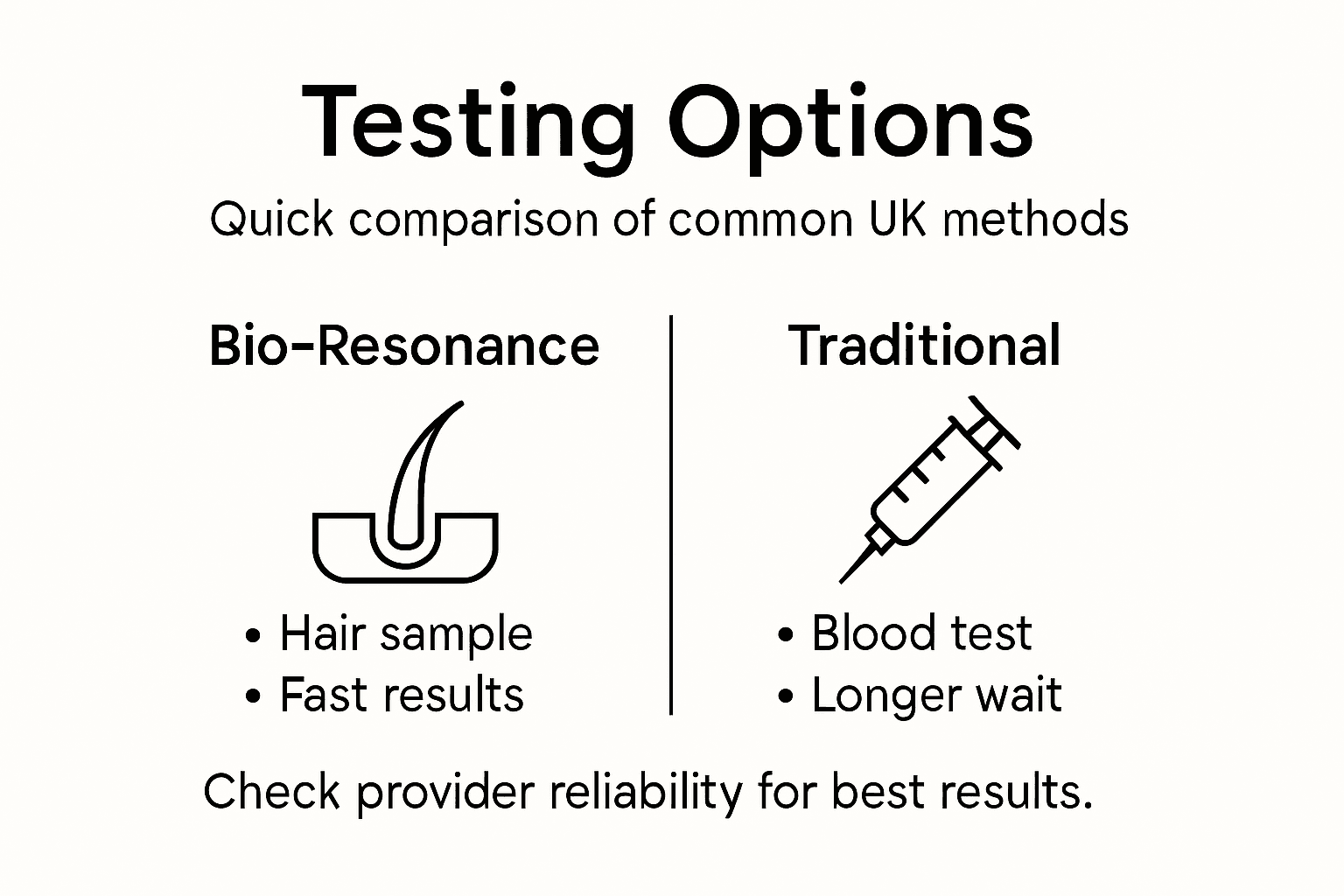
Common misconceptions about intolerance testing need addressing. Some people think these tests are “true” medical diagnoses—they’re not. They’re indicative tools that help you identify patterns worth investigating further. The results guide your elimination diet attempts, showing you which foods correlate with your symptoms. This means you work with the findings rather than treating them as absolute truth.
Another myth: testing replaces professional guidance. It doesn’t. Your results work best alongside careful observation and, ideally, support from someone trained in elimination diet methodology. This combination helps you distinguish between genuine intolerances and coincidental timing.
The bioresonance technology used measures subtle energetic responses to different substances. Whether you’re sceptical or convinced, the practical benefit lies in what you do with the results—identifying which dietary changes actually make you feel better.
Testing provides a starting point for discovery, not a definitive diagnosis. Your own experience confirms whether the results prove useful.
Why affordability matters here: many people with unexplained digestive issues have already spent hundreds on GP appointments, referrals, and elimination diet trial-and-error. An affordable test that narrows down possibilities quickly saves both money and months of guesswork.
Pro tip: Before testing, keep a simple food and symptom diary for one week to identify obvious patterns—this baseline makes interpreting your results far more actionable and helps you spot which recommendations actually match your experience.
Types of Testing: Bio-Resonance and Alternatives
When you’re exploring intolerance testing options, you’ll encounter different approaches. The most common method in the UK market is bioresonance testing, which measures energetic responses to various food and environmental substances. This technology analyses how your body reacts to specific items without requiring invasive procedures.
Bioresonance works by scanning hair samples against a database of frequencies representing different foods and substances. Bio-resonance testing methodology uses subtle energetic measurements to identify potential triggers. The process is quick, painless, and suitable for testing large panels of items—sometimes over 1,100 different foods and environmental factors.
But bioresonance isn’t your only option. Here’s how testing approaches compare:
- Bioresonance testing – non-invasive, hair sample based, results in 48–72 hours, covers extensive food panels
- IgE allergy testing – blood test identifying true allergies through antibody responses, NHS-available but tests fewer items
- IgG elimination-based testing – identifies delayed-reaction patterns through blood samples, typically slower and more expensive
- Elimination diet tracking – observation-based method using food diaries, free but requires significant time and discipline
Many people use bioresonance because it’s affordable and comprehensive. You’re not limited to testing a handful of common allergens—you can identify which of hundreds of foods might be problematic. This breadth helps you spot unusual triggers others might miss.
Traditional NHS allergy testing focuses on immediate, severe reactions (true allergies). That’s valuable, but it leaves many people with delayed intolerances undiagnosed. Bioresonance fills that gap by screening broadly for sensitivity patterns, making it practical for those with mysterious digestive symptoms.
The alternative approach—pure elimination diets without testing—works but demands patience. You remove suspected foods, wait weeks, reintroduce them methodically. It’s thorough but time-consuming and can lead to unnecessarily restrictive eating habits.
Bioresonance testing provides speed and breadth; other methods offer different benefits depending on your time availability and testing goals.
Your choice depends on practical factors: budget, urgency, and how many potential triggers you want to explore. Most people in the UK choosing private testing select bioresonance for its combination of affordability, speed, and comprehensive coverage.
Here’s a concise comparison of intolerance testing methods for easy reference:
| Method | Sample Type | Coverage | Results Speed |
|---|---|---|---|
| Bioresonance | Hair sample | 500–1,100 items | 48–72 hours |
| IgE Allergy (NHS) | Blood sample | Limited allergens | Weeks to months |
| IgG Antibody (Private) | Blood sample | Moderate food range | Several days to weeks |
| Elimination Diet | Diary tracking | Unlimited foods | Requires weeks/months |
Pro tip: Whichever testing method you choose, combine results with a one-week symptom diary kept before testing—this creates a baseline that helps you validate which findings actually match your personal experience.
How At-Home Intolerance Testing Works
The process is simpler than you might expect. At-home intolerance testing eliminates the need for clinic visits, blood draws, or lengthy appointments. Instead, you collect a small hair sample, post it to a UK-based laboratory, and receive comprehensive results within 48–72 hours.
Here’s the step-by-step process:
- Order your test kit online and receive it within a few days
- Collect a small hair sample from your scalp using the provided equipment
- Complete the included form with your personal details and health information
- Place the sample and form in the provided envelope and post it to the laboratory
- Receive your detailed digital report via email within 48–72 hours
- Review your results and begin planning your elimination diet strategy
The testing itself uses bioresonance technology to scan your hair sample against a database of over 500 or 1,100 food and environmental items. How intolerance tests work by measuring subtle energetic responses to different substances. The hair sample contains enough biological information to identify potential sensitivities without needing blood or invasive procedures.

What makes this approach non-invasive and convenient is the simplicity. No needles, no waiting rooms, no scheduling around clinic hours. You do everything at home on your own timeline.
The results arrive as a detailed digital report identifying:
- Foods and drinks triggering potential reactions
- Environmental sensitivities compounding digestive issues
- Severity ratings for each identified item
- Clear recommendations for elimination diet planning
- Guidance on food substitutes and alternatives
Unlike blood tests that measure antibodies, bioresonance testing identifies sensitivity patterns through energetic analysis. This means you’re not getting a yes/no answer about true allergies—you’re getting a map of which foods correlate with your symptoms based on energetic responses.
The real value emerges when you use your results to test foods systematically, discovering which recommendations actually match your personal experience.
Many people find the 48–72 hour turnaround crucial. You’re not waiting weeks for results whilst continuing to eat foods that might be problematic. This speed lets you start addressing symptoms quickly rather than continuing months of guesswork.
The affordability factor matters too. Traditional NHS referrals test limited items and involve lengthy waits. Private testing at £80–£400 gives you comprehensive coverage and rapid results, making it accessible for those seeking answers without significant cost or time investment.
Pro tip: Keep a detailed food and symptom journal starting the day you submit your sample—when your results arrive, you’ll have real-world observations that confirm or clarify which recommendations from your report actually work for your body.
Costs, Reliability, and NHS Differences
Private intolerance testing in the UK typically costs between £70 and £200 for basic panels, with comprehensive tests reaching up to £400. This affordability makes private testing accessible for people who’ve already spent money on unsuccessful GP appointments and referrals.
The NHS approach differs significantly. NHS allergy testing focuses on IgE-mediated allergies—true allergic reactions causing immediate, severe symptoms. This testing has strong clinical backing and catches dangerous reactions quickly. However, it tests only a limited range of common allergens and doesn’t address delayed intolerances affecting digestion.
Here’s how they compare:
- NHS testing – free at point of use, focuses on true allergies, limited food panels, lengthy waiting lists
- Private bioresonance testing – £80–£400, tests 500–1,100 items, results in 48–72 hours, non-invasive
- Private IgG antibody testing – higher cost, blood sample required, slower results, evidence base questioned
- Home hair analysis kits – cheap but unreliable, using outdated technology like Vega machines
Reliability matters here. Home food allergy and intolerance tests vary significantly in quality. Some cheap options using hair analysis lack accuracy and scientific backing. The NHS doesn’t recommend IgG antibody testing for intolerances due to insufficient evidence, though many private providers offer it.
Bioresonance testing sits in a different category. It’s not claiming to measure antibodies or diagnose allergies—it’s identifying sensitivity patterns through energetic responses. This distinction is important. Your results work best as a starting point for exploration, not definitive medical diagnosis.
The speed advantage matters practically. NHS waiting lists can stretch months. Private testing delivers results within days, letting you start investigating potential triggers immediately rather than continuing to eat problematic foods.
Cost-effectiveness depends on your situation. If you’ve already spent hundreds on unsuccessful elimination diet attempts or endless appointments, private testing at £80–£400 clarifies priorities quickly. If you have severe allergic reactions, NHS testing remains essential for safety.
For quick clarity, see the main differences between NHS and private intolerance testing:
| Aspect | NHS Allergy Testing | Private Bioresonance Testing |
|---|---|---|
| Cost | Free at point of use | £80–£400 per panel |
| Scope | Common allergens only | Hundreds of foods/environment |
| Waiting Time | Long waiting lists | Results in days |
| Diagnostic Aim | IgE allergic reactions | Sensitivity pattern guidance |
Private testing offers speed and breadth; NHS testing offers safety confirmation for true allergies—consider using both if you have severe reactions alongside digestive symptoms.
The key reliability factor isn’t the test type alone—it’s how you interpret results. Cheap hair analysis kits lack evidence. Reputable bioresonance services use proper laboratory protocols and deliver results suitable for elimination diet planning. Professional guidance helps you avoid unnecessary dietary restrictions whilst identifying genuine triggers.
Pro tip: Choose a private testing provider using proper laboratory protocols with clear result interpretation guidance rather than the cheapest option; spend the difference on professional support interpreting your results rather than risking unreliable findings.
Interpreting Results, Limitations, and Next Steps
Your test results arrive as a detailed digital report listing foods and environmental items ranked by sensitivity level. But understanding what those rankings actually mean is crucial before you start eliminating foods from your diet.
The report identifies items flagged as potential triggers based on bioresonance analysis. This doesn’t mean you’re allergic or that you must avoid these foods forever. It means these items showed energetic responses worth investigating through an elimination diet.
Here’s what the results actually tell you:
- Foods scoring high sensitivity warrant elimination for 2–4 weeks
- Medium-sensitivity items might trigger symptoms but aren’t urgent priorities
- Low-sensitivity items can typically remain in your diet whilst you test others
- Environmental sensitivities often compound food reactions and deserve attention
The key limitation: how to interpret intolerance results requires you to test findings through actual elimination and reintroduction. Your results provide direction, not certainty. A food flagged in your report might not affect you personally, whilst an unlisted item could trigger symptoms.
Why? Because bioresonance measures energetic patterns, not individual biology. Two people with identical results may experience completely different symptoms from the same foods. Your personal observation matters more than the report ranking.
Common mistakes when interpreting results include:
- Eliminating everything flagged simultaneously, making it impossible to identify which changes help
- Treating results as permanent dietary restrictions rather than exploration tools
- Ignoring environmental factors that compound digestive symptoms
- Skipping professional guidance when eliminating major food groups
The elimination diet process works best when done systematically. Remove your top five flagged items for 2–4 weeks, document symptoms daily, then reintroduce foods one at a time. This reveals which items genuinely affect you versus false positives.
Results guide your exploration; your body confirms what actually matters through systematic testing.
Limitations worth acknowledging: bioresonance testing cannot diagnose coeliac disease, true allergies, or medical conditions requiring clinical investigation. If you have severe reactions, vomiting, or anaphylaxis, NHS testing and medical supervision remain essential.
Next steps after receiving results:
- Start an elimination diet with your top 3–5 flagged items
- Keep detailed symptom records for 2–4 weeks
- Reintroduce eliminated foods one per week
- Note which foods genuinely correlate with symptom improvement
- Build a personalised diet based on your observed responses
Many people find professional support invaluable here. Dieticians trained in elimination diets help you avoid nutritional gaps whilst identifying genuine triggers. This guidance transforms results from confusing data into actionable changes.
Pro tip: Focus your first elimination on the three highest-ranked items from your report rather than eliminating everything at once—this approach identifies which changes actually help you within weeks rather than creating unnecessary dietary restrictions.
Find Fast Relief with Affordable At-Home Intolerance Testing
If you are struggling with unexplained digestive discomfort and searching for clear answers, our at-home intolerance tests offer an affordable and non-invasive solution. Using bioresonance technology, you can identify potential food and environmental sensitivities quickly without invasive procedures or long NHS waiting lists. Understand which foods could be triggering your symptoms so you can make informed choices to improve your wellbeing.

Take control of your digestive health today with the comprehensive options available at UK Food Intolerance. Choose from our Core Single Intolerance Test or the Ultimate Single Intolerance Test to receive detailed reports within 48–72 hours. For more information on improving your digestive symptoms and practical support, explore our Digestive Health Archives – UK Food Intolerance and discover how easy it is to begin your personalised elimination diet journey. Act now to move beyond frustration and start feeling better sooner.
Frequently Asked Questions
What is affordable intolerance testing?
Affordable intolerance testing is a method to identify food intolerances by analysing a small hair sample to determine which foods may be causing digestive discomfort without the need for invasive blood tests.
How do I interpret the results of my intolerance test?
The results indicate sensitivity levels of various foods and environmental items. Items with high sensitivity should be eliminated for 2–4 weeks, while medium and low sensitivity items can be reintroduced later based on your personal observations of symptoms.
How does bioresonance testing work compared to traditional allergy testing?
Bioresonance testing measures subtle energetic responses to foods and substances through a hair sample, allowing for broad testing (up to over 1,100 items), while traditional allergy testing typically focuses on specific IgE-mediated allergies via blood tests and involves fewer items.
Why is it important to keep a food and symptom diary before testing?
Keeping a food and symptom diary for a week before testing helps you identify obvious patterns and serves as a useful baseline for interpreting your results, making it easier to match the findings with your personal experience.










Leave a Reply
Want to join the discussion?Feel free to contribute!