

Dealing with ongoing digestive discomfort can leave anyone feeling frustrated and confused, especially when symptoms seem to come out of nowhere. For many UK adults aiming to take charge of their health, identifying hidden triggers is an important step towards lasting relief. By focusing on a “symptom diary” and considering reliable, evidence-based testing, you can build a clearer picture of what your body needs and choose an approach that truly fits your lifestyle and health goals.
Table of Contents
- Step 1: Assess Your Symptoms And Health Goals
- Step 2: Evaluate Available Test Types And Methods
- Step 3: Compare UK-Based Intolerance Test Providers
- Step 4: Review Inclusions And Pricing For Each Test
- Step 5: Verify Result Delivery Speed And Report Clarity
Quick Summary
| Key Point | Explanation |
|---|---|
| 1. Document Your Symptoms Clearly | Maintain a symptom diary to identify patterns and connections to specific foods over one to two weeks. |
| 2. Understand Testing Methods and Their Validity | Research various food intolerance tests, as many lack scientific support. Choose methods backed by solid evidence. |
| 3. Compare Provider Services Thoroughly | Evaluate different UK providers based on pricing, speed of results, and clarity of reporting to select the best fit for your needs. |
| 4. Review Report Clarity and Support Offered | Ensure the results are easy to understand and check if additional support is available for interpreting them. |
| 5. Assess Costs and Inclusions | Investigate what each test includes, considering base fees and any additional costs for interpretation or consultation services. |
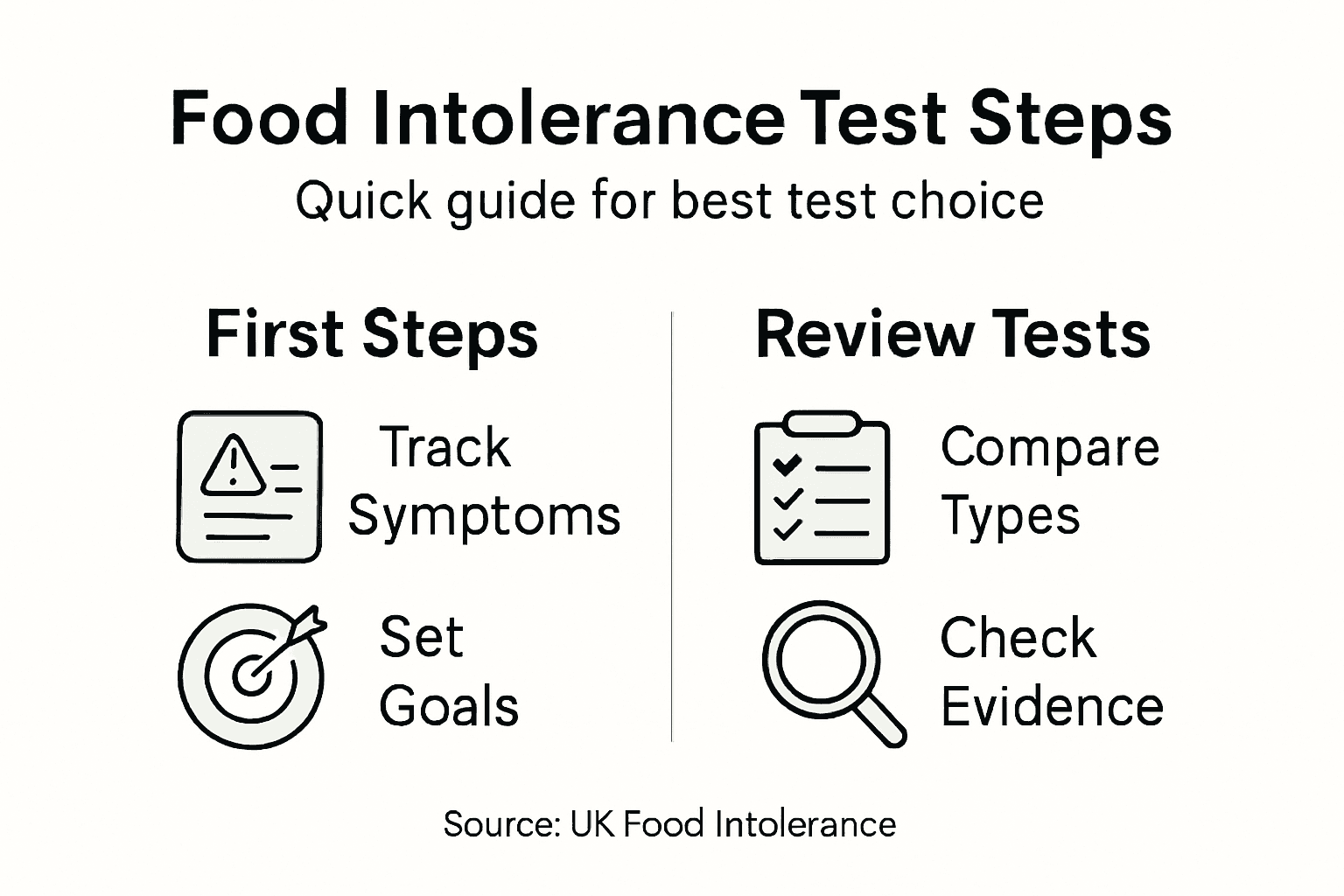
Step 1: Assess your symptoms and health goals
Before you choose a food intolerance test, take time to understand what’s actually happening with your health. This step is about becoming clear on your symptoms and what you hope to achieve, rather than jumping straight to testing. When you have a focused picture of what you’re experiencing, you’ll make better decisions about which test suits your needs and how to interpret your results afterwards.
Start by keeping a simple symptom diary for about one to two weeks. Write down what you eat, when you eat it, and any physical reactions you notice afterwards. You might experience digestive discomfort like bloating, stomach pain, or irregular bowel movements. Perhaps you’re dealing with headaches, fatigue, brain fog, or skin reactions like eczema or hives. Some people notice joint pain or general inflammation that seems to come and go. The key is to spot patterns rather than get hung up on individual incidents. Did that feeling of fatigue happen after you ate wheat? Did bloating consistently follow dairy? These connections matter, even if they’re not crystal clear yet.
Next, think about your health goals. Are you trying to resolve persistent digestive issues that have disrupted your daily life? Do you want to reduce inflammation or improve your energy levels? Some people simply want to understand their body better and take a preventative approach to health. Your goals shape what you do with test results. Understanding the difference between food allergy and intolerance will help you appreciate why this matters. Intolerances don’t trigger your immune system the way allergies do, but they can still cause real, frustrating symptoms that deserve attention.
Consider also what’s already on your radar. Have you noticed particular foods that seem to cause problems, even if you’re not certain why? Have doctors suggested food might be playing a role in your symptoms? Has anyone in your family dealt with food sensitivities? These clues help you understand whether you’re looking for broad confirmation across many foods, or whether you’re trying to narrow down a smaller suspect list. Write all of this down. Having it documented will make the testing process far more meaningful and help you track improvements after you’ve identified your triggers.
Helpful tip Keep your symptom diary simple and honest. You don’t need medical terminology. Write what actually bothers you: “felt bloated after lunch” or “woke up with a headache” is perfectly useful.
Step 2: Evaluate available test types and methods
Now that you understand your symptoms and what you want to achieve, it’s time to look at the testing options available to you. Not all food intolerance tests are created equal, and understanding the differences will help you choose an approach that actually delivers reliable results you can trust.

You’ll encounter several testing methods when researching options. Blood tests that measure IgG antibodies are commonly marketed for food intolerance detection. Hair analysis is another popular choice, often promoted as non-invasive and quick. You might also come across applied kinesiology, leukocytoxic testing, or electrodermal testing methods like Vega testing. Each claims to identify your triggers, but here’s where scientific evidence becomes crucial. When you look at various food intolerance testing methods, you’ll find that many commercial tests lack solid scientific validation. Some are marketed heavily but don’t hold up under rigorous scrutiny. This doesn’t mean they’re all worthless, but it does mean you need to be discerning about what claims are backed by evidence.
Bioelectrical impedance testing and other electrical measurement methods sound sophisticated, but the science behind them for detecting food intolerances remains questionable. Hair analysis appeals to many people because it’s simple and non-invasive, yet research on its accuracy is limited. IgG blood tests are more established in conventional medicine, though their reliability for identifying intolerances is debated among professionals. The gold standard approach, according to clinical experts, remains the elimination diet followed by systematic reintroduction of foods under professional guidance. This method takes longer but gives you real, observable evidence of what your body actually reacts to.
When evaluating any test, ask yourself these questions. Does the provider explain how the test works in clear, scientific terms? Do they acknowledge limitations alongside benefits? Are they making promises that sound too good to be true? Look for tests offered by reputable laboratories, ones that provide detailed explanations of methodology and don’t oversell results. Consider whether the test measures something specific to your situation or whether it’s a broad screening. A test that checks 500 items might be overkill if you’ve already narrowed down your suspect foods to a handful. Think about what information would actually change your behaviour and improve your health.
Helpful tip Choose a test method that aligns with both your budget and your symptoms. If you have specific suspected foods, a targeted approach may serve you better than comprehensive screening across thousands of items.
To help clarify the major food intolerance testing methods available, here’s a quick comparison:
| Test Method | Scientific Evidence | Sample Required | Typical Cost Range |
|---|---|---|---|
| IgG Blood Test | Moderate; debated | Blood sample | £75–£250 |
| Hair Analysis | Low; limited proof | Hair sample | £40–£150 |
| Elimination Diet | High; clinical gold | Dietary tracking | Varies; usually free |
| Bioelectrical Impedance | Low; inconclusive | Physical contact | £55–£120 |
| Electrodermal (Vega) Testing | Weak; not robust | Hand sensor | £60–£200 |
Step 3: Compare UK-based intolerance test providers
With your symptoms clearly documented and your understanding of different testing approaches developed, you’re ready to compare the actual providers available to you in the UK. This step involves looking at what different laboratories and testing services offer, how they operate, and which one aligns best with your needs and budget.
Start by identifying the key factors that matter to you. How quickly do you need results? Some providers deliver findings within 48 to 72 hours, whilst others take several weeks. What’s your budget? Prices vary significantly across the UK market, from budget-friendly options testing around 500 items to comprehensive services analysing over 1,100 foods and environmental triggers. How do they collect samples? Most reputable UK providers use simple hair sample collection that you can do at home, which removes the need for clinic visits. Look at what they actually test. Are they screening for foods you genuinely eat, or are they including obscure items that won’t help your situation? Consider the best food intolerance tests through expert comparison to understand how different providers stack up against each other.
Next, examine the quality of their reporting and support. A good provider doesn’t just give you a list of foods to avoid. They offer detailed digital reports explaining what your results mean, often with guidance on elimination diets and reintroduction protocols. Do they provide any follow-up support or interpretation help? Can you speak with someone if your results confuse you? Check whether they’re transparent about their methodology. Reputable providers explain how their testing works, what the science says, and what limitations exist. They won’t make outlandish promises or claim their test is 100% accurate. Look at customer reviews and testimonials, but read them critically. One person’s experience might not match yours, particularly if they had very different symptoms or health goals.
Also consider logistics. How straightforward is the ordering process? Can you easily understand what you’re getting before you pay? Is the sample collection kit clear and easy to use? What happens after you’ve posted your sample? Can you track it? Do they provide a timeline for results? Comparing a few providers side by side will quickly show you who takes customer experience seriously and who doesn’t. Write down your top two or three choices with their key details, then make your decision based on which provider best matches what you’ve learned about your own situation.
Helpful tip Request sample reports from providers before ordering. Most will show you what your results will actually look like, allowing you to decide whether their format and detail level meet your needs.
Step 4: Review inclusions and pricing for each test
Now you’ve narrowed down your options, it’s time to look closely at what each provider actually includes in their service and how much it costs. This step prevents you from getting surprised by hidden fees or discovering after purchase that a test doesn’t cover what you needed.
Start by listing the base price for each test you’re considering. Write down whether this is a one-time fee or if there are additional charges. Some providers include follow-up consultations or detailed dietary guidance in their base price, whilst others charge extra for interpretation support. Check what’s actually included in the testing itself. A test advertised at £99 might screen 500 foods, whereas a £249 option could test over 1,100 items including environmental triggers like dust mites or pet dander. Neither is better or worse without knowing your actual needs. If you’ve already suspected dairy and gluten are your main culprits, does paying extra to test thousands of obscure items make sense? Conversely, if you have widespread symptoms affecting your skin, joints, and digestion, a broader screening might reveal patterns you hadn’t considered. Look beyond the test price itself. What else costs money? Sample collection kits, shipping, digital reports, and interpretation consultations can add up. Some providers include these in their quoted price, whilst others list them separately.
Consider what professional expertise underpins the service. Understanding the investment required in professional food intolerance testing education reveals why some providers charge more than others. Qualified professionals who’ve completed rigorous training typically charge higher fees, but that expertise translates to better report interpretation and more reliable guidance. You’re not just paying for the test itself. You’re paying for the knowledge and experience behind the analysis. When reviewing pricing, ask yourself whether the provider offers any added value. Do they provide a detailed written report? Video consultations to explain results? A structured elimination diet plan tailored to your findings? Access to a dietitian or nutritionist? These extras justify higher costs if they genuinely help you implement changes.
Create a simple comparison table with your top three providers. List the total cost you’d actually pay, what the test covers, what support you receive, and how quickly you’ll get results. Be honest about what matters most to you. If you’re on a tight budget, a basic test might serve you well. If you’ve already spent months feeling unwell, investing in comprehensive testing plus professional interpretation could be money well spent. The cheapest option isn’t always the best value.
Helpful tip Request itemised breakdowns from providers so you understand exactly what you’re paying for. This prevents unexpected costs and helps you compare true like-for-like pricing across different services.
Here is a summarised guide to reviewing provider inclusions and pricing:
| Provider Service Element | Typical Inclusion | Added Value Example |
|---|---|---|
| Base Price | One-off fee | May include rapid results |
| Test Coverage | 500–1,100 foods | Includes environmental triggers |
| Report Type | Digital PDF | Colour-coded severity categories |
| Interpretation Support | Written guide | Video consultation with nutritionist |
| Follow-up Access | By email or online | Weekend and evening support |
Step 5: Verify result delivery speed and report clarity
Timing matters when you’re waiting for answers about your health, and the quality of your report determines how useful your test results actually are. This step ensures you choose a provider who delivers results quickly and presents them in a way you can actually understand and act upon.
First, establish your timeline. How urgently do you need your results? If you’re experiencing debilitating symptoms that are affecting your work or daily life, waiting six weeks for results might feel unbearable. Some UK providers deliver findings within 48 to 72 hours of receiving your sample, whilst others take two to three weeks or longer. Ask providers directly about their turnaround times, and check whether they have seasonal delays or backlogs. A provider promising 48-hour results during August might not meet that timeline during peak testing season in January. Also ask what happens after results are delivered. Do you get them via email, secure online portal, or post? Can you access them immediately, or is there a waiting period? If you’re paying for urgent testing, you want to access your results without further delays.
Next, examine report clarity. A good intolerance test report should tell you clearly which foods triggered reactions during testing. It should categorise findings by severity level, typically showing which items produced strong reactions versus mild ones. The report should explain what the results mean in plain language, not just medical jargon. You should understand why certain foods appear on your list and what you’re supposed to do about it. Look for reports that include practical guidance on elimination diets and reintroduction protocols. Some providers offer colour-coded reports with traffic light systems that make it obvious which foods to avoid completely, which to minimise, and which are generally safe. Others provide numerical scores or detailed scientific explanations that can feel overwhelming if you’re not medically trained. Review comprehensive guidance on food intolerance testing interpretation to understand what a well-structured report should contain and how to interpret findings properly.
Ask whether the provider offers any explanation support alongside your results. Some include a consultation call with a nutritionist or health practitioner who walks you through your report and answers questions. Others provide written guides or video tutorials explaining how to use your results. This support is invaluable, particularly if your results are unexpected or complex. Before ordering, request a sample report from your chosen provider. Most will show you exactly what your results will look like, allowing you to judge whether the format and detail suit your needs. This simple step prevents the disappointment of receiving results that don’t meet your expectations.
Helpful tip Check whether your provider offers results access during evenings and weekends. If you’re ordering a test to get answers quickly, make sure you can actually view and begin acting on your results when they arrive.
Discover Your Food Sensitivities with Confidence and Ease
Choosing the right food intolerance test can feel overwhelming with so many options and contradictory claims. If you are struggling with unexplained digestive issues, fatigue, or inflammation, it is essential to find a method you can trust that offers clear, fast, and actionable results. The challenge many face is navigating through unreliable tests and confusing reports while seeking answers that genuinely improve wellbeing.
At UK Food Intolerance, we specialise in providing non-invasive at-home hair analysis using bio-resonance technology to detect food and environmental sensitivities. Whether you want a comprehensive screening of over 1,100 items or a focused test covering 500 common triggers, our affordable kits come with detailed digital reports delivered within 48 to 72 hours. We also support your journey by offering straightforward guidance on interpreting results and managing an elimination diet to help you reclaim your health. Take the first step towards clarity by visiting our trusted resources like the Digestive Health Archives – UK Food Intolerance or learn more about specific intolerances such as Egg Intolerance – Symptoms, Allergy Difference & How to Test.

Don’t let uncertainty hold you back any longer. Act now to identify the foods that may be affecting your wellbeing with our fast, reliable, and easy-to-use testing services. Explore your options today at UK Food Intolerance and move forward with confidence.
Frequently Asked Questions
How can I determine which food intolerance test is right for me?
Choose a test based on your specific symptoms and health goals. Begin by keeping a symptom diary for one to two weeks to track your reactions to foods, and then evaluate different testing options that align with your findings.
What are the main types of food intolerance tests available?
The most common types of food intolerance tests include IgG blood tests, hair analysis, and elimination diets. Review each method’s scientific backing and suitability for your specific symptoms to make an informed choice.
How do I compare different food intolerance test providers?
Start by considering key factors such as test coverage, results delivery speed, and customer support. Create a comparison table listing these elements for your top choices to identify which provider best meets your needs.
What should I expect from a food intolerance test report?
A good food intolerance test report should clearly outline which foods triggered your reactions and categorize their severity. Look for reports that include practical guidance on what to avoid and how to reintroduce foods into your diet, making it easier to act on your results.
How long should I expect to wait for my test results?
Results delivery times vary by provider, ranging from 48 to 72 hours to several weeks. Check with the provider to confirm their typical turnaround time and if they offer updates on the status of your results.
Is there follow-up support available after receiving my test results?
Many reputable providers offer follow-up support, including consultations or written guides to help you interpret your results. When choosing a provider, inquire about the availability of this support to ensure you can understand and act on your findings.










Leave a Reply
Want to join the discussion?Feel free to contribute!