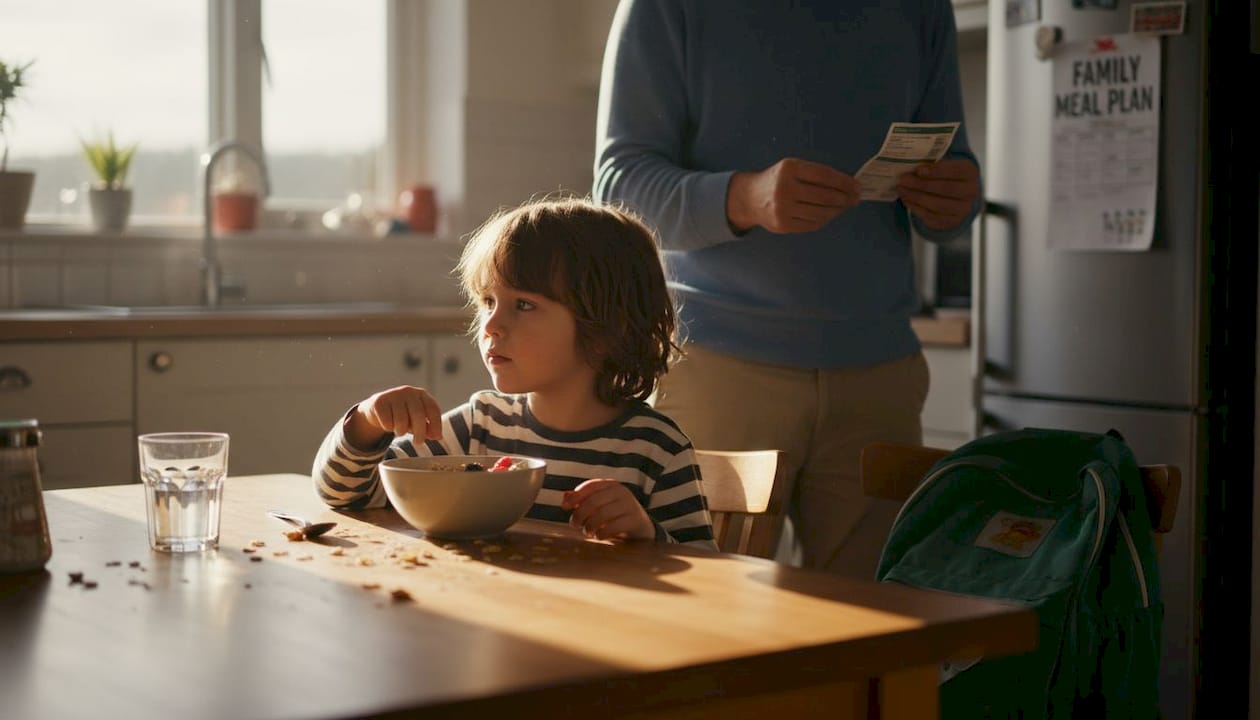
Food intolerance in children usually shows up as tummy ache, bloating, wind, loose stools or constipation a few hours after eating a particular food, and it is uncomfortable rather than dangerous. Food allergies are different and can be serious, so the first job is to work out which pattern your child’s symptoms fit.
The good news is that most tummy troubles in children can be untangled calmly, with a food diary, some patient observation and, where needed, help from your GP. This guide covers the signs, the usual suspects, other common causes, and how to make changes safely while your child is still growing.
What are the signs of food intolerance in a child?
Children rarely say “I feel bloated”. More often you will hear “my tummy hurts”, or notice a change in behaviour. Signs to look out for include:
- tummy ache or cramps, often a few hours after a meal
- a swollen, tight tummy or lots of wind
- loose stools, diarrhoea or, just as often, constipation
- feeling sick, or going off their food
- tiredness, grumpiness or headaches that seem to follow certain meals
- itchy skin or a mild rash
Younger children often point to their belly button for any kind of discomfort, so watch what they do as well as what they say: going off their food, curling up after meals or rushing to the toilet.
The key clue is a repeating link to food. A symptom that turns up after the same food, again and again, is worth investigating. One bad afternoon after a birthday party is not.
Is it an intolerance or an allergy?
An allergy involves the immune system and usually causes symptoms quickly, often within minutes. An intolerance mainly involves digestion, comes on more slowly and depends on how much your child ate.
| Food allergy | Food intolerance | |
|---|---|---|
| Timing | Usually within minutes to two hours | Usually a few hours later, sometimes the next day |
| Amount | A tiny amount can cause a reaction | Small amounts are often fine |
| Typical signs | Hives, swelling of the lips, face or eyes, vomiting, coughing, wheezing | Tummy ache, bloating, wind, loose stools, constipation |
| How serious | Can be life-threatening | Uncomfortable, not dangerous |
Milk, egg, peanuts, tree nuts, fish and shellfish are among the foods that most often cause allergies in children. If your child has swelling, hives, vomiting or breathing difficulty after eating, get medical help straight away (call 999 if they are struggling to breathe or become floppy or drowsy) and speak to your GP about allergy testing. Intolerance testing is not a substitute for allergy testing. The NHS food allergy page lists every warning sign. For a fuller comparison, see food intolerance vs allergy: how to tell the difference.
Which foods most often upset children’s tummies?
A handful of foods and drinks come up again and again:
- Milk and dairy. Some children find large amounts of milk hard to digest because of its natural sugar, lactose. Big glasses of milk, milkshakes and ice cream are more likely to cause trouble than butter or hard cheese. Our guide to lactose intolerance vs dairy sensitivity explains the difference.
- Fruit juice and smoothies. Lots of fruit sugar in one go can cause wind and loose stools, especially apple and pear juice.
- Sugar-free sweets and drinks. Sweeteners such as sorbitol and xylitol can have a laxative effect, which is why these products carry a warning about eating too much.
- Beans, lentils and some vegetables. These are healthy foods, but they ferment in the gut and make wind, particularly when a child is not used to them.
- Wheat. Bread, pasta and cereals are staples, so wheat is often suspected. Coeliac disease, an autoimmune condition triggered by gluten, needs ruling out first with a GP blood test, and your child must keep eating gluten until the test is done or the result may be inaccurate. The NHS explains how coeliac disease is diagnosed.
- Fizzy and caffeinated drinks. Cola and energy drinks can upset tummies and sleep. High-caffeine drinks are labelled as not recommended for children.
- Large, fatty or spicy meals. Takeaways and party food can upset anyone’s digestion, children included.
Could something else be causing the tummy aches?
Often, yes. Before blaming a food, it is worth considering the other common causes of tummy trouble in children:
- Constipation is very common and can cause tummy ache, bloating, poor appetite and even soiling. Too little fibre or fluid, or holding on at school, are frequent reasons.
- Worry and stress. Tummy aches that appear on school mornings, before tests or around changes at home can be linked to anxiety rather than food.
- Eating habits. Eating very fast, grazing all day, or big meals late in the evening can all leave a child uncomfortable.
- Bugs and infections can leave the gut sensitive for a few weeks afterwards.
If constipation might be part of the picture, more water, fruit, vegetables and wholegrains, plus regular unhurried time on the toilet after meals, often help within a couple of weeks. Keeping a note of all these alongside food helps you see the whole picture.
How do you keep a food diary for a child?
A two-week diary is the most useful thing you can do, and it costs nothing. Our food and symptom diary template works for children too. A few tips:
- Include everything: school lunches, snacks at friends’ houses, drinks and sweets. Ask school what was on the menu if your child has school dinners.
- Use a simple scale. Younger children can point to a row of faces from happy to very sore; older children can give a score out of 10.
- Record toilet habits: how often, and whether stools were hard, normal or loose.
- Add context: sleep, school days versus weekends, worries, illness.
- Involve your child. Older children often enjoy helping, and they will remember snacks you did not see.
After two weeks, look for symptoms that follow the same food three or more times. Also look at the good days: what was missing?
Is it safe to cut foods out of a child’s diet?
Children need a wide range of nutrients to grow, so changes need more care than for an adult. Before removing a major food group such as dairy or wheat, involve your GP or a registered dietitian. The NHS also advises not cutting foods from a child’s diet without advice.
If you do make a change, keep it small and short:
- Change one food at a time, not several.
- Swap like for like so nothing is lost: a calcium-fortified plant milk for cow’s milk, rice or potatoes for pasta.
- Try it for two to three weeks and keep the diary going.
- Bring the food back to see whether symptoms return. If nothing changes, the food goes back in for good.
Our guide on how to do an elimination diet properly covers the method in more detail. Keep the language positive at home: talk about “trying a swap” rather than “bad foods”, so food does not become something to worry about.
When to speak to a GP
- Your child is losing weight, not growing as expected or seems unusually tired and pale.
- There is blood in their poo, or vomiting or diarrhoea that will not settle.
- Tummy pain wakes them at night or is getting worse.
Where hair sample testing fits
If your diary has not pointed to a clear suspect, a test can give you a shortlist, so you can try one sensible swap rather than guessing or cutting out several foods. Our tests are suitable for children from age 6, and an adult (18+) places the order.
Our tests use bioresonance, a complementary approach outside mainstream medicine. The report is a wellness test and a starting point for a food diary and elimination plan, not a medical diagnosis, and it does not test for allergies, coeliac disease or lactose intolerance. It groups items into high, medium and low response, and includes an elimination plan and a printable food diary. Use it alongside your GP or dietitian’s advice when your child’s diet is involved.
Sampling is simple and painless: you snip 4–5 strands of hair close to the scalp and post them to our UK lab in a standard envelope. Our guide on how to take your hair sample shows each step. You will receive a digital report within 3–5 working days of the sample arriving, or 48 working hours with priority.
The Core Intolerance Test tests 500 food items, including cow’s milk, wheat, egg and many everyday family foods. If you are testing more than one family member, there is a multibuy saving when you order 2, 4 or 5 human tests; see intolerance testing for couples and families.
Frequently asked questions
Can children grow out of a food intolerance?
Tolerance can change as children grow, and a food that caused trouble at one age may be fine later. That is why it is worth reintroducing foods after a period without them rather than avoiding them indefinitely. Allergies follow a different pattern and should be reviewed with your GP.
What age can my child take a hair sample intolerance test?
Our tests are suitable for children from age 6. An adult aged 18 or over places the order and takes the sample. The report is a wellness test and a starting point for a food diary, not a medical diagnosis.
Should I tell my child's school about a suspected food intolerance?
It helps to let school know if you are trying a food swap, so lunches and snacks match the plan. For a diagnosed allergy, school needs a formal care plan from your GP or specialist. Intolerances usually need only a short note.
How do I stop my child feeling different if they avoid a food?
Keep swaps low-key and as similar to normal food as possible, and avoid calling foods good or bad. Pack familiar alternatives for parties and school trips. Most elimination trials only last a few weeks, so you can reassure your child it is an experiment, not forever.
This guide is general wellness information, not medical advice. Our test uses bioresonance, a complementary (CAM) method; it does not diagnose allergies, coeliac disease or any medical condition. Speak to a GP if you have severe or ongoing symptoms.