
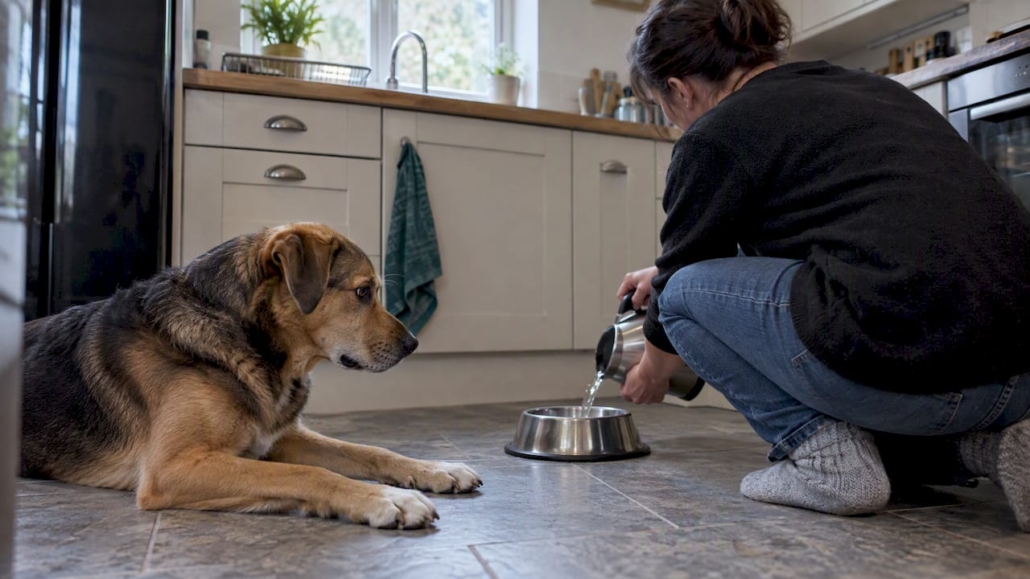
Chicken can trigger diarrhoea through a simple dietary upset, a food allergy or intolerance, or an infection such as Salmonella. Most mild cases settle quickly. First, check your dog’s energy and drinking. If your dog is bright and drinking, try short-term home care. Seek urgent help for blood in the stool, repeated vomiting, severe lethargy or dehydration.
TL;DR:
- A single loose stool after chicken does not establish an allergy; confirmation requires an elimination trial with a veterinarian that lasts 6–12 weeks.
- For a healthy adult dog, offer water, consider fasting up to 24 hours, then serve small bland meals without chicken if it may be the trigger.
- Seek urgent veterinary care for blood or mucus, repeated vomiting, a painful abdomen, dry gums, or severe lethargy; puppies and older dogs need earlier assessment.
- Diet related diarrhea may settle in 1–3 days, but call your veterinarian if it lasts longer or keeps returning.
- Raw chicken can carry Salmonella, which can spread to people; wash your hands, disinfect bowls and bedding, and limit sick dogs’ contact with vulnerable people.
Table of Contents
- What can cause dog diarrhoea after eating chicken?
- How do you tell a mild reaction from something urgent?
- What can you safely do at home in the first 48 hours?
- What will the vet check, and how is diarrhoea treated?
- How do you find out whether chicken is the trigger?
- Why home care and vet oversight work best together
- How can an at-home pet intolerance test help?
- FAQ
- Sources
What can cause dog diarrhoea after eating chicken?
Several different things can sit behind the same loose stool, so it helps to separate them.
- Dietary upset: rich, fatty, seasoned or raw chicken, or a sudden switch to it, can unsettle the gut. Most diet-related cases settle in 1–3 days if your dog is otherwise happy and active.
- Allergy or intolerance: chicken is a common protein in dog food, and reactions can start at any age. Signs include diarrhoea, vomiting, flatulence and itchy skin.
- Infection: contaminated or raw chicken can carry Salmonella and other bacteria. Salmonellosis is zoonotic, so it can pass from pets to people.
- Other triggers: parasites, foreign bodies, or toxic extras in prepared chicken such as onion and garlic. Onions and garlic are on the list of foods dogs must avoid.
A food allergy needs a vet-guided food trial lasting 6–12 weeks to confirm. One bad stool after a chicken meal does not prove an allergy.
How do you tell a mild reaction from something urgent?
Your dog’s behaviour tells you more than the stool alone. Look at energy, thirst and what is actually coming out.
Mild signs usually mean home care is reasonable:
- One or two loose stools
- Normal energy and a normal appetite for water
- No blood or mucus
Contact a vet urgently if you see any of these:
- Blood or mucus in the stool
- Repeated vomiting
- Severe lethargy or signs of dehydration, such as dry gums
- A tender or painful tummy
- A very young or very old dog
Seek veterinary attention if symptoms last more than a few days, or if diarrhoea keeps coming back. Repeated episodes can point to a chronic cause that needs investigating.
Pro Tip: Take a quick photo of the stool and note the time of each episode. Your vet will find it far more useful than a description from memory.
What can you safely do at home in the first 48 hours?
For an otherwise healthy adult dog, these steps are a sensible starting point. Puppies, elderly dogs and dogs with other illnesses should see a vet first.
- Offer fresh water at all times, and watch that your dog is actually drinking.
- Consider a short fast of up to 24 hours to rest the gut, for healthy adults only.
- Reintroduce small, frequent bland meals. Plain white rice is the usual base.
- Add boiled chicken breast only if chicken is unlikely to be the cause. If you suspect chicken, choose another bland protein with your vet’s advice.
- Ask your vet about oral rehydration or a probiotic paste rather than trying unsupervised remedies.
- Wash your hands after handling your dog, and disinfect bowls and bedding.
Salmonellosis is zoonotic, so keep sick pets away from children, older people and anyone with a weakened immune system if infection is possible.
Avoid raw or seasoned chicken. Keep any homemade bland diet short too: BSAVA warns that prolonged home-prepared diets risk micronutrient gaps.
What will the vet check, and how is diarrhoea treated?
Your vet will start with a clinical examination and a conversation about diet, since BSAVA recommends a nutritional assessment for sick dogs. Tell them exactly what your dog ate, including treats and table scraps.
Depending on how unwell your dog is, expect some of the following:
- Faecal tests for parasites
- Targeted culture or PCR if an infection is suspected
- Blood tests if your dog seems unwell in themselves
- Supportive treatment: fluids, diet changes and probiotics
Antibiotics are not routine unless a bacterial infection is likely. If Salmonella is suspected, your vet may give specific hygiene advice. Chronic cases may mean referral and longer investigation, where diet trials remain central.
How do you find out whether chicken is the trigger?
The reliable method is an elimination food trial run with your vet. You feed a novel protein or hydrolysed diet and nothing else, usually for 6–12 weeks. Strict adherence is essential, because a single flavoured chew can force a restart.
- Agree the trial diet and start date with your vet.
- Remove every other food: treats, dental chews, flavoured medicines and table scraps.
- Keep a daily diary of stools, itching and energy.
- Hold the trial for the full period, even if your dog improves early.
- Reintroduce chicken on its own, then watch for signs returning. A consistent return of symptoms points to chicken.
At-home screening can help you shortlist candidate foods to discuss with your vet. It does not replace a veterinary diagnosis. Our elimination diet checklist is a handy way to stay organised.
Pro Tip: Tell everyone in the house about the trial. One well-meaning slice of cheese or a stray biscuit can undo weeks of work.
Why home care and vet oversight work best together
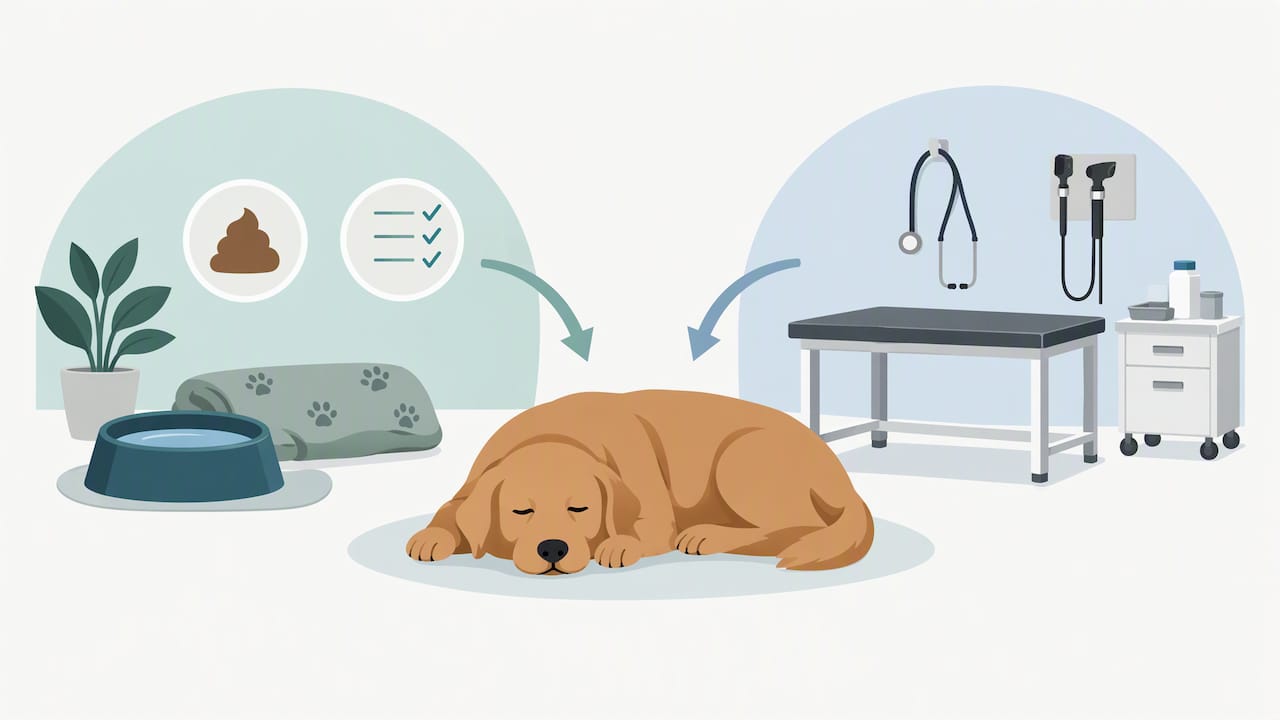
Many diet-related cases do settle fast when owners follow safe home-care steps and watch for red flags. That is the reassuring part. The part people skip is professional input when problems linger. A homemade bland diet that drifts into weeks of boiled chicken and rice is not balanced, and it can hide the real trigger.
If you are unsure, call your vet. Early advice prevents complications, and it protects the people in your home from zoonotic infections too.
— Rob
How can an at-home pet intolerance test help?
If your dog has reacted more than once, you may want somewhere to start. Our at-home pet intolerance tests, Intro 300, Peak 700 and Essential 500, let you screen for candidate food triggers from a hair sample, without a stressful trip to the clinic. You can then take the results to your vet and use them to shape a proper elimination trial.
We offer this as a helpful adjunct to veterinary care, never a replacement for it. Share the report with your vet before changing your dog’s diet. Ready to look? Explore our pet testing options.
FAQ
My dog still has diarrhoea after chicken and rice. What should I do?
Stop the chicken and ring your vet if it lasts more than a few days, or sooner if you see blood, vomiting or lethargy. Persistent loose stools after a bland diet can mean an allergy, infection or another underlying cause that needs checking.
What does Salmonella dog poop look like?
It usually looks like ordinary diarrhoea, so you cannot identify it by sight. Only a faecal test can confirm it. Wash your hands after handling your dog and follow the hygiene precautions for Salmonella in pets.
What meat is best for dogs with diarrhoea?
Plain, cooked, unseasoned lean meat is the usual choice for a short bland diet. If chicken is the suspected trigger, ask your vet which alternative protein to use rather than guessing.
What are the three toxic meats for dogs?
No single trio applies, but raw or undercooked meat can carry Salmonella, and seasoned meat may contain onion or garlic, which are toxic to dogs. Cooked bones are also a hazard because they can splinter.









Leave a Reply
Want to join the discussion?Feel free to contribute!