

Food intolerance tests carry very little physical risk. A hair sample or a fingerprick blood draw won’t hurt you. The real risk sits downstream: acting on an unreliable result can lead to unnecessary food exclusions, nutrient shortfalls, anxiety and a delayed diagnosis of the condition actually causing your symptoms. If symptoms persist, or before you cut out several foods at once, speak to a GP or dietitian first.
TL;DR:
- Home intolerance tests, such as hair analysis and IgG blood panels, lack validated diagnostic mechanisms and often provide unreliable results.
- UK health authorities warn that clinical diagnosis relies on symptom tracking and supervised elimination, not on commercial test outcomes.
- Acting on false positives from unvalidated tests can cause nutritional deficiencies, increased anxiety, and delay diagnosis of underlying conditions like coeliac disease or IBS.
- Results from reliable tests like lactose hydrogen breath tests are accurate only when interpreted alongside clinical context and professional guidance.
- At-home tests from UK Food Intolerance serve as initial screening tools, emphasizing the importance of consulting healthcare professionals before making dietary changes.
Table of Contents
- How different intolerance tests work and what they involve
- What UK clinical guidance says about accuracy
- The downstream harms of an unreliable result
- What to do next if you suspect a food intolerance
- How UK Food Intolerance supports a responsible testing pathway
- The balance between easy access and clinical caution
- Where our tests fit into your next steps
- Sources
- FAQ
How different intolerance tests work and what they involve
Not all tests are built the same, and the differences matter for both accuracy and safety.
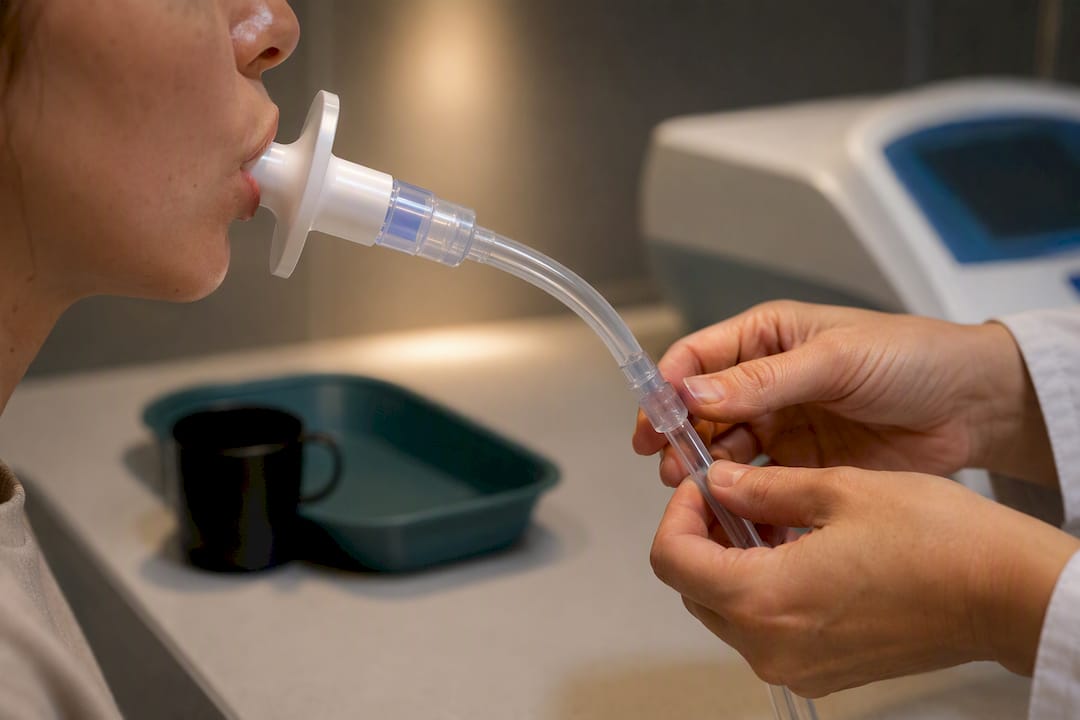
The lactose hydrogen breath test is a clinically validated method. You drink a lactose solution, then breathe into a device at intervals. It can cause mild, temporary symptoms such as gas, bloating or diarrhoea during the test itself, which MedlinePlus describes as an expected, supervised part of the process rather than a side effect to worry about.
IgE blood tests and skin prick tests are used in clinical settings to investigate suspected allergy, not intolerance, and are carried out under medical supervision because a true allergic reaction, though rare in this context, needs prompt management.
Commercial tests marketed for intolerance work differently:
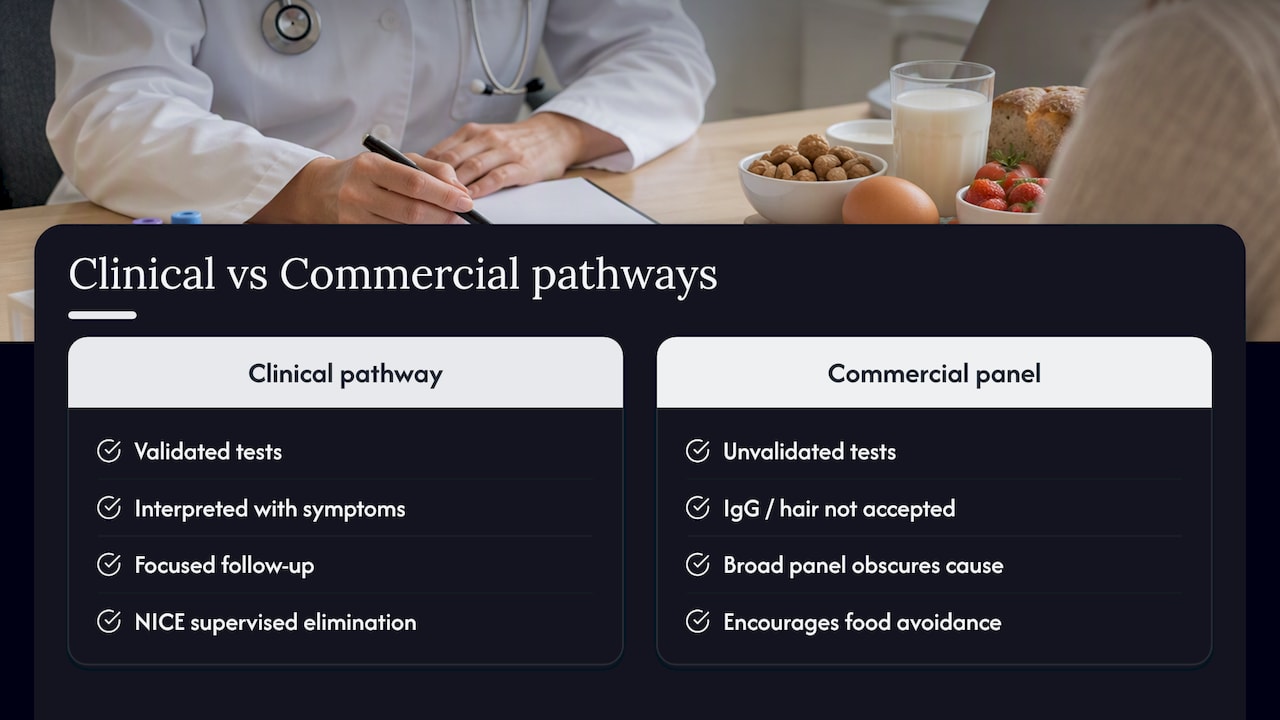
- IgG blood panels measure antibodies that occur naturally after eating, not markers of intolerance.
- Hair analysis tests use a strand of hair and have no recognised diagnostic mechanism for food reactions.
- Electrodermal or “vega” testing measures skin resistance and is not a validated diagnostic method.
Collecting a hair sample or a fingerprick carries almost no physical risk. The concern is what happens after you read the report.
What UK clinical guidance says about accuracy
This is the part most home-test marketing leaves out. NHS guidance states plainly that some home tests claiming to diagnose food intolerances are not recommended, because evidence of their accuracy is limited and they can encourage unnecessary avoidance of multiple foods. Local NHS allergy services go further: Leeds Teaching Hospitals NHS Trust states there are no validated blood or skin tests for food intolerance and does not accept results from hair analysis or IgG testing as a basis for diagnosis.
A Food Standards Agency survey found a significant minority of people reported having a food intolerance, a figure that shows how many people are weighing up these tests, and how much is riding on getting reliable information.
For children with suspected food allergy, NICE guidance recommends a supervised elimination approach with dietitian oversight rather than reliance on a single test result. Advertising regulators have also taken a firm line: rulings against IgG-based home testing have found that the evidence submitted to support diagnostic claims was not robust enough, and that marketing in this space can mislead consumers.
Taken together, the picture from UK health bodies is consistent: a test result means little without clinical context. A review of testing approaches makes the same point from a diagnostic angle: a broad commercial panel can actually obscure the real cause of your symptoms rather than clarify it.
The downstream harms of an unreliable result
This is where the genuine side effects of intolerance testing show up, and they’re rarely physical.
- Cutting out multiple food groups on the strength of one panel can lead to nutritional deficiency, particularly when dairy, wheat and other staple foods are excluded together.
- Unnecessary avoidance can reduce your tolerance over time, and reintroducing a food later may cause a stronger reaction, a particular concern if a true IgE allergy hasn’t been ruled out.
- Restrictive eating driven by an unclear result can bring on anxiety around food, along with the financial and social cost of managing an unnecessary diet.
- Relying on an unvalidated test can delay the diagnosis of a real underlying condition, such as coeliac disease, lactose malabsorption, IBS or IBD, all of which need their own specific management.
Restrictive eating patterns triggered by test anxiety are worth taking seriously in their own right, not just as a side note to nutrition; broader research on restrictive diet pitfalls covers how easily a well-intentioned exclusion diet tips into an unbalanced one.
Pro Tip: Never remove more than one food group at a time without dietitian input, so you can tell which exclusion, if any, is actually helping.
What to do next if you suspect a food intolerance
A test result, home or clinical, is only useful alongside a clear picture of your symptoms and eating habits.
- Start a food-and-symptom diary for two to four weeks before changing anything, noting what you ate and how you felt afterwards.
- If an exclusion looks worth trying, follow a supervised elimination for two to six weeks, as NICE guidance recommends, then reintroduce the food systematically to check the reaction repeats.
- Ask your GP about clinical tests where appropriate, such as a lactose breath test or targeted IgE testing, and request a dietitian referral for children, pregnancy, older adults or anyone showing weight loss.
- Seek urgent care immediately for swelling, breathing difficulty or a widespread rash after eating: these are allergy warning signs, not intolerance symptoms.
- If you’re checking a home-test provider, look for a UK-based lab, a transparent method description, clinician support for interpreting your report, and a clear data privacy policy.
A food-and-symptom diary guide and an elimination diet checklist can help you keep this process structured rather than guesswork.
How UK Food Intolerance supports a responsible testing pathway
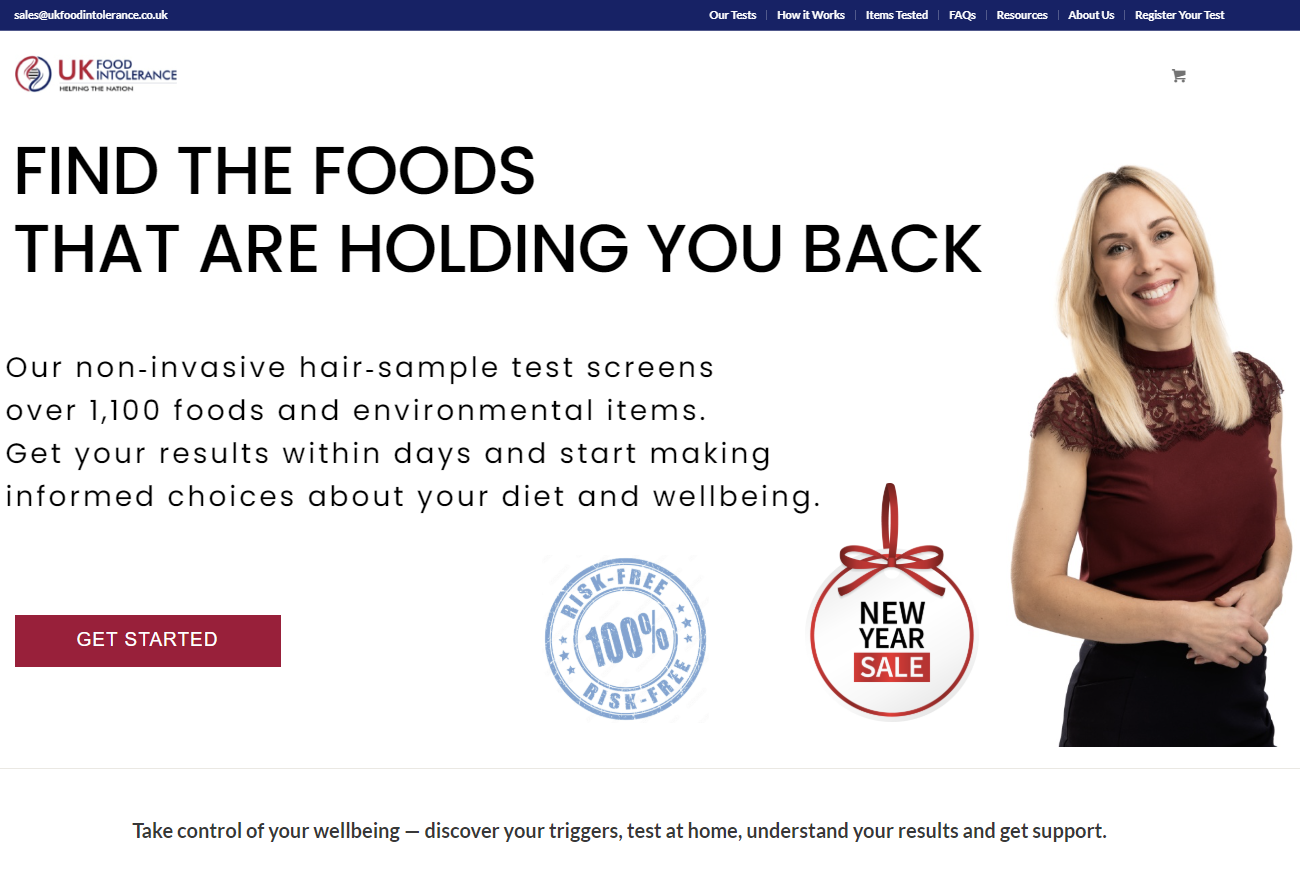
UK Food Intolerance offers at-home tests using a non-invasive hair sample, processed at a UK-based laboratory, with digital reports delivered within 48 to 72 hours. The tests are designed as a screening tool to help you identify possible triggers worth discussing with a professional, not as a replacement for clinical diagnosis.
- Hair samples are collected at home with simple, guided instructions.
- Reports cover a wide panel of food and environmental items to help narrow down what to investigate.
- Supportive resources, including an elimination diet checklist and a guide to understanding sensitivity reports, help you act on results sensibly.
- Customers are encouraged to bring their results to a GP or dietitian, especially before making lasting dietary changes.
The balance between easy access and clinical caution
Home testing has a place. It gives people a starting point when GP appointments are hard to come by and symptoms are dragging on unexplained. But a test result is a prompt for further investigation, never a verdict.
The mistake isn’t taking a test. It’s treating a printed report as more certain than it is, and building a restrictive diet around it without anyone checking the reasoning. Pair any test, home or clinical, with a symptom diary and a professional conversation, and it becomes useful. Skip that step, and you risk trading one unexplained symptom for a new set of problems.
— Rob
Where our tests fit into your next steps
If you’re weighing up whether to test at all, the honest answer is that a test works best as one input among several, not a standalone diagnosis. UK Food Intolerance’s range of tests, including the Core Test, Essential Test, Premium Test and the Ultimate Plus Intolerance Test at £140.99 one-off per person, gives you a broad, fast starting point using a simple hair sample and a UK-based lab.
- Results arrive as a digital report within 48 to 72 hours of your sample reaching the lab.
- Hair sample collection is non-invasive and done entirely at home.
- Supportive guides, including an elimination diet checklist, help you interpret and act on your results.
Reports are delivered within 48 to 72 hours of your sample arriving at the lab, giving you a fast starting point for a conversation with your GP or dietitian rather than a wait of weeks.
Whichever test you choose, treat the result as a lead worth discussing with a clinician, not a diagnosis to act on alone. Browse the full test range to find the option that matches what you’re trying to investigate.
This article is general information, not a substitute for advice from a qualified doctor. Consult a qualified healthcare professional about your own circumstances before acting on anything here.
Sources
- Food intolerance — NHS
- Food allergy in children and young people — NICE guideline (evidence)
- Expert review on testing and diagnostic approach — PubMed
- Adverse reactions to food — Leeds Teaching Hospitals NHS Trust
FAQ
Are food intolerance tests accurate?
Clinically validated tests, such as the lactose breath test, are accurate for the specific condition they’re designed to detect. Commercial panels such as IgG blood tests or hair analysis have limited evidence supporting their accuracy, which is why NHS guidance advises against relying on them alone.
How long does it take for food sensitivities to go away?
Symptoms often ease once a trigger food is removed for the length of a supervised elimination trial, typically two to six weeks according to NICE guidance. Reintroducing the food afterwards, under guidance, confirms whether the reaction was genuinely linked to that food.
What are the effects of food intolerance on the body?
Common symptoms include bloating, diarrhoea, flatulence and abdominal pain, often appearing a few hours after eating, alongside headaches, fatigue or joint pain in some people. These effects come from the intolerance itself, not from testing, and a GP can help confirm the cause.
Can I eat before an allergy test?
For a lactose breath test, you’ll usually be asked to fast beforehand, and your clinic will give exact instructions. For skin prick or IgE blood tests for allergy, follow the specific guidance from the clinic carrying out the test, since fasting requirements vary by test type.
Are home intolerance tests safe to use?
The sample collection itself, whether hair or fingerprick, carries minimal physical risk. The main safety concern is acting on the result without clinical context, which can lead to unnecessary food exclusions and nutritional gaps.










Leave a Reply
Want to join the discussion?Feel free to contribute!